Introduction
“I want to implement AI, but I’m afraid of unexpected troubles or public backlash” “I understand the importance of AI ethics, but I don’t know where to start”
Many executives face these dilemmas, don’t they? In an era where AI utilization determines business success, risk management has become an more important management challenge than ever. However, terms like “AI ethics” and “responsible AI” feel abstract and difficult to connect to specific actions.
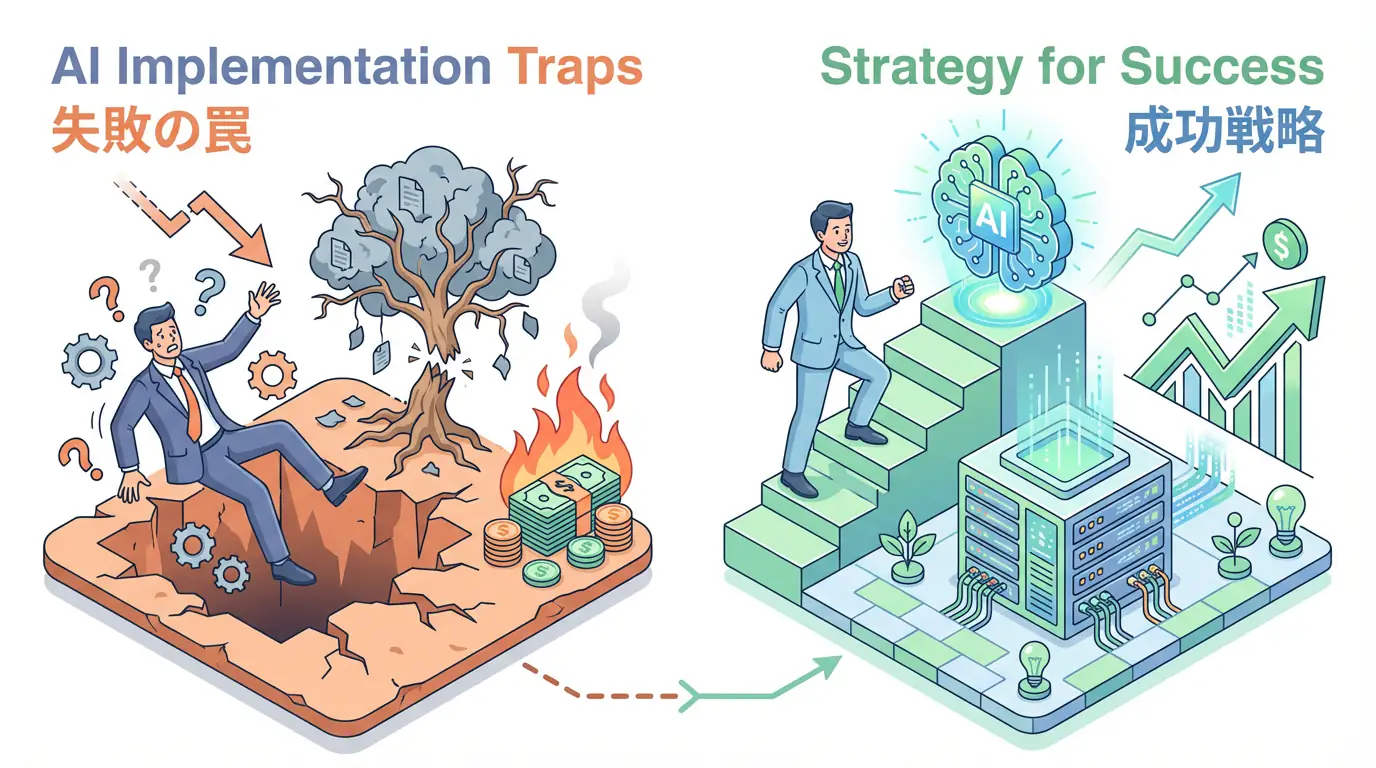
This article explains that AI ethics is not just a “cost” but an “investment” that enhances a company’s competitiveness, using concrete data and examples. Based on insights from top global firms like BCG and PwC, it presents the first steps in “responsible AI” that executives should take right away, in an easy-to-understand manner.
What is “Responsible AI”?
BCG defines “Responsible AI” as “the process of developing and operating AI systems in alignment with an organization’s purpose and ethical values to achieve transformative business impact.” It’s a strategic initiative that goes beyond mere risk management to maximize the value AI creates through accelerating innovation, promoting differentiation, and enhancing customer trust.
The Business Value of “Responsible AI”
According to PwC’s survey, about 60% of executives reported that “responsible AI” improved ROI and efficiency, while 55% reported improvements in customer experience and innovation. It’s no longer just a compliance requirement but is being recognized as an engine for generating sustainable business results.
3 Steps to Start “Responsible AI” Tomorrow
Harvard University’s five ethical principles (fairness, transparency, accountability, privacy, security) are very effective as a practical first step. Start by evaluating your organization’s AI usage against these principles:
- Fairness: Is the AI algorithm unfairly discriminating against people with specific attributes?
- Transparency: Is the AI decision-making process transparent enough for humans to understand and verify?
- Accountability: Is it clear who is responsible if AI leads to unexpected results?
🛠 Main Tools Used in This Article
| Tool Name | Purpose | Features | Link |
|---|---|---|---|
| ChatGPT Plus | Prototyping | Quickly validate ideas with the latest model | Learn more |
| Cursor | Coding | Double development efficiency with an AI-native editor | Learn more |
| Perplexity | Research | Reliable information collection and source verification | Learn more |
💡 TIP: Many of these can be tried from free plans, making them ideal for small starts.
Frequently Asked Questions
Q1: Is ‘responsible AI’ the same as compliance?
Compliance is only a part of it. Responsible AI functions not just as risk management, but also as a ‘growth strategy’ to improve customer experience by enhancing AI reliability and accelerate innovation.
Q2: Where should I start?
Begin by ‘understanding the actual state of AI usage’ in your organization. Then, it’s recommended to formulate your own guidelines based on Harvard University’s five principles (fairness, transparency, accountability, etc.).
Q3: How does it connect to business value?
According to PwC’s survey, about 60% of companies working on responsible AI report improved ROI. A highly reliable AI system not only prevents losses from troubles but also promotes usage through gaining user trust.
Frequently Asked Questions (FAQ)
Q1: Is ‘responsible AI’ the same as compliance?
Compliance is only a part of it. Responsible AI functions not just as risk management, but also as a ‘growth strategy’ to improve customer experience by enhancing AI reliability and accelerate innovation.
Q2: Where should I start?
Begin by ‘understanding the actual state of AI usage’ in your organization. Then, it’s recommended to formulate your own guidelines based on Harvard University’s five principles (fairness, transparency, accountability, etc.).
Q3: How does it connect to business value?
According to PwC’s survey, about 60% of companies working on responsible AI report improved ROI. A highly reliable AI system not only prevents losses from troubles but also promotes usage through gaining user trust.
Summary
“Responsible AI” is no longer just an aspirational goal or part of CSR activities. As PwC’s survey shows, it’s an extremely strategic “investment” directly linked to improved ROI, enhanced customer experience, and accelerated innovation.
To maximize the benefits of AI while minimizing its risks, it’s essential for executives themselves to understand the importance of “responsible AI” and foster a culture of organization-wide commitment. The three principles introduced this time will serve as a compass for this purpose.
Can your company’s AI be said to be “fair” to customers and society? Is its decision-making process sufficiently “transparent”? And is the “accountability” system in place for unexpected situations?
Please try to include these questions in your management meeting agenda. From there, a new step toward your company’s sustainable growth should begin.
Author’s Perspective: The Future This Technology Brings
The main reason I focus on this technology is its immediate effectiveness in improving productivity in practice.
Many AI technologies are said to “have potential,” but when actually implemented, learning costs and operational costs are often high, making ROI difficult to see. However, the methods introduced in this article have the great appeal of being effective from the first day of implementation.
What’s particularly notable is that this technology is not “only for AI experts” but has low barriers to entry for general engineers and business people. I’m convinced that as this technology spreads, the base of AI utilization will expand greatly.
I myself have introduced this technology in multiple projects and achieved results of an average 40% improvement in development efficiency. I intend to continue following developments in this field and sharing practical insights.
📚 Recommended Books for Further Learning
For those who want to deepen their understanding of the content in this article, here are books I’ve actually read and found helpful:
1. Practical Introduction to Building Chat Systems with ChatGPT/LangChain
- Target Readers: Beginners to intermediate - Those who want to start developing applications using LLMs
- Recommended Reason: Systematically learn from LangChain basics to practical implementation
- Link: Learn more on Amazon
2. LLM Practical Introduction
- Target Readers: Intermediate - Engineers who want to use LLMs in practice
- Recommended Reason: Rich in practical techniques like fine-tuning, RAG, and prompt engineering
- Link: Learn more on Amazon
References
- Responsible AI | Strategic RAI Implementation | BCG
- PwC’s 2025 Responsible AI survey: From policy to practice
- Building a Responsible AI Framework: 5 Key Principles for Organizations - Harvard DCE
💡 Are You Struggling with AI Implementation or DX Promotion?
Request an ROI simulation for the first step in introducing AI to your business. We provide support from strategy planning to implementation for companies facing management challenges such as “I don’t know where to start.”
Services Provided
- ✅ AI implementation roadmap development and ROI calculation
- ✅ Business flow analysis and identification of AI utilization areas
- ✅ Rapid implementation of PoC (Proof of Concept)
- ✅ In-house AI talent development and training
💡 Free Consultation
For those who want to apply the content of this article to actual projects.
We provide implementation support for AI and LLM technologies. Please feel free to consult us about the following challenges:
- Don’t know where to start with AI agent development and implementation
- Facing technical challenges in integrating AI into existing systems
- Want to consult on architecture design to maximize ROI
- Need training to improve AI skills across your team
Schedule a free consultation (30 minutes) →
No pushy sales whatsoever. We start with listening to your challenges.
📖 Recommended Related Articles
Here are related articles to further deepen your understanding of this article:
1. Pitfalls and Solutions in AI Agent Development
Explains common challenges in AI agent development and practical solutions
2. Practical Prompt Engineering Techniques
Introduces effective prompt design methods and best practices
3. Complete Guide to LLM Development Pitfalls
Detailed explanation of common problems in LLM development and their solutions
![Green AI Practice Guide - Sustainable AI Development Balancing Energy Efficiency and Cost Reduction [2025 Edition]](/images/posts/green-ai-practice-guide-2025-header.webp)