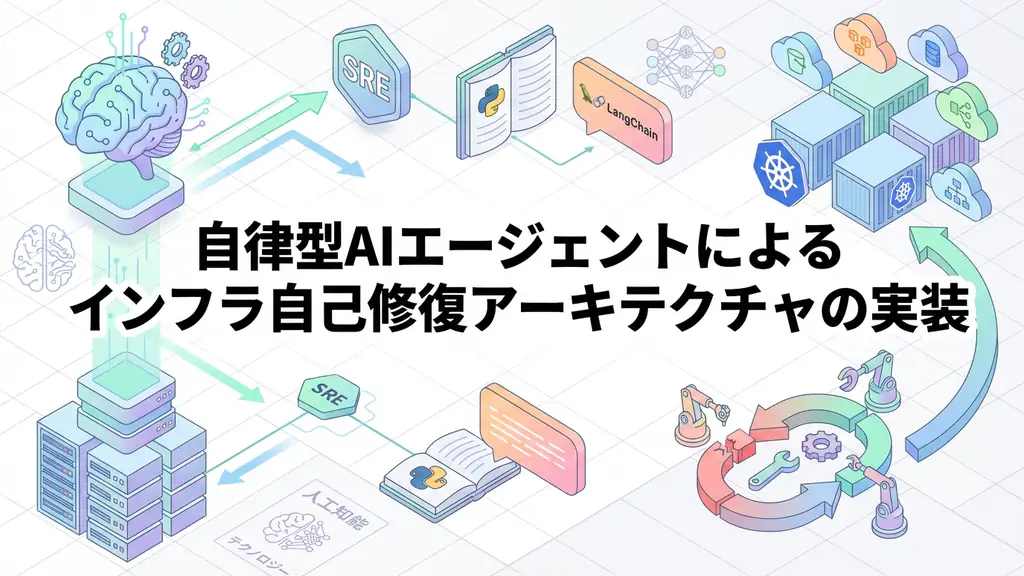
RAG Implementation Patterns Guide - From Basics to Advanced Techniques

What is RAG?

RAG (Retrieval-Augmented Generation) enhances LLM capabilities by retrieving relevant information from external knowledge bases. It solves LLM limitations like hallucinations and knowledge cutoff.

Basic RAG Architecture

User Query → Embedding → Vector Search → Retrieve Documents → LLM + Context → Answer

Implementation Steps

  1. Document Processing

    • Load documents (PDF, HTML, etc.)
    • Chunk with appropriate size (500-1000 tokens)
    • Generate embeddings
  2. Vector Storage

    • Store embeddings in vector database
    • Add metadata for filtering
  3. Retrieval

    • Embed user query
    • Similarity search (k-NN)
    • Return top-k documents
  4. Generation

    • Combine query + retrieved context
    • Generate answer with LLM

Advanced RAG Patterns

Combines BM25 (keyword) and vector (semantic) search:

# LangChain example
from langchain.retrievers import BM25Retriever, EnsembleRetriever

bm25_retriever = BM25Retriever.from_documents(docs)
vector_retriever = vectorstore.as_retriever()

ensemble_retriever = EnsembleRetriever(
    retrievers=[bm25_retriever, vector_retriever],
    weights=[0.5, 0.5]
)

2. Re-ranking

Use cross-encoder to re-rank retrieved documents:

from sentence_transformers import CrossEncoder

reranker = CrossEncoder('cross-encoder/ms-marco-MiniLM-L-6-v2')
scores = reranker.predict([(query, doc) for doc in retrieved_docs])

3. Query Expansion

Expand queries to improve retrieval:

# Generate multiple query variations
expanded_queries = [
    query,
    llm.invoke(f"Rephrase: {query}"),
    llm.invoke(f"Simplify: {query}")
]

Best Practices

AspectRecommendation
Chunk Size500-1000 tokens with 10-20% overlap
Embedding Modeltext-embedding-3-large or E5
Top-k5-10 documents
Temperature0.1-0.3 for factual tasks

🛠 Key Tools

ToolPurposeLink
LangChainRAG FrameworkDetails
LlamaIndexData FrameworkDetails
PineconeVector DBDetails

FAQ

Q1: What is the basic RAG architecture?

Document ingestion → Embedding → Vector storage → Similarity search → Context-augmented generation

Q2: How to improve RAG accuracy?

Use hybrid search, re-ranking, query expansion, and metadata filtering

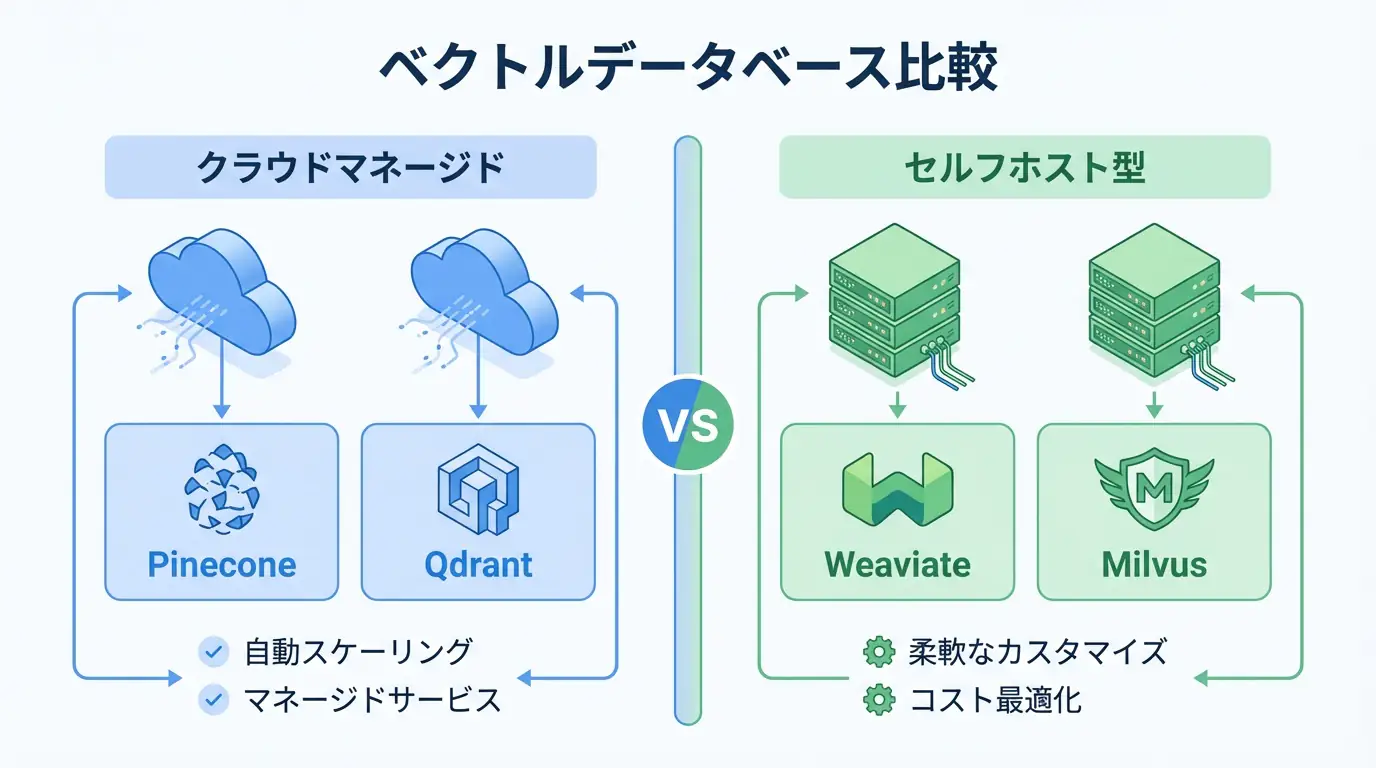
Q3: Which vector database should I use?

Pinecone for managed, Qdrant for cost-effective, Milvus for large scale

Summary

RAG is essential for production LLM applications. Start with basic implementation, then add advanced techniques like hybrid search and re-ranking for better performance.
Tag Cloud

#LLM (17) #ROI (16) #AI Agents (13) #Python (9) #RAG (9) #Digital Transformation (7) #AI (6) #LangChain (6) #AI Agent (5) #LLMOps (5) #Small and Medium Businesses (5) #Agentic Workflow (4) #AI Ethics (4) #Anthropic (4) #Cost Reduction (4) #Debugging (4) #DX Promotion (4) #Enterprise AI (4) #Multi-Agent (4) #2025 (3) #2026 (3) #Agentic AI (3) #AI Adoption (3) #AI ROI (3) #AutoGen (3) #LangGraph (3) #MCP (3) #OpenAI O1 (3) #Troubleshooting (3) #Vector Database (3) #AI Coding Agents (2) #AI Orchestration (2) #Automation (2) #Best Practices (2) #Business Strategy (2) #ChatGPT (2) #Claude (2) #CrewAI (2) #Cursor (2) #Development Efficiency (2) #DX (2) #Gemini (2) #Generative AI (2) #GitHub Copilot (2) #GraphRAG (2) #Inference Optimization (2) #Knowledge Graph (2) #Langfuse (2) #LangSmith (2) #LlamaIndex (2) #Management Strategy (2) #MIT Research (2) #Mixture of Experts (2) #Model Context Protocol (2) #MoE (2) #Monitoring (2) #Multimodal AI (2) #Privacy (2) #Quantization (2) #Reinforcement Learning (2) #Responsible AI (2) #Robotics (2) #SLM (2) #System 2 (2) #Test-Time Compute (2) #VLLM (2) #VLM (2) #.NET (1) #2025 Trends (1) #2026 Trends (1) #Adoption Strategy (1) #Agent Handoff (1) #Agent Orchestration (1) #Agentic Memory (1) #Agentic RAG (1) #AI Agent Framework (1) #AI Architecture (1) #AI Engineering (1) #AI Fluency (1) #AI Governance (1) #AI Implementation (1) #AI Implementation Failure (1) #AI Implementation Strategy (1) #AI Inference (1) #AI Integration (1) #AI Management (1) #AI Observability (1) #AI Safety (1) #AI Strategy (1) #AI Video (1) #Autonomous Coding (1) #Backend Optimization (1) #Backend Tasks (1) #Beginners (1) #Berkeley BAIR (1) #Business Automation (1) #Business Optimization (1) #Business Utilization (1) #Business Value (1) #Business Value Assessment (1) #Career Strategy (1) #Chain-of-Thought (1) #Claude 3.5 (1) #Claude 3.5 Sonnet (1) #Compound AI Systems (1) #Computer Use (1) #Constitutional AI (1) #CUA (1) #DeepSeek (1) #Design Pattern (1) #Development (1) #Development Method (1) #Devin (1) #Edge AI (1) #Embodied AI (1) #Entity Extraction (1) #Error Handling (1) #Evaluation (1) #Fine-Tuning (1) #FlashAttention (1) #Function Calling (1) #Google Antigravity (1) #Governance (1) #GPT-4o (1) #GPT-4V (1) #Green AI (1) #GUI Automation (1) #Image Recognition (1) #Implementation Patterns (1) #Implementation Strategy (1) #Inference (1) #Inference AI (1) #Inference Scaling (1) #Information Retrieval (1) #Kubernetes (1) #Lightweight Framework (1) #Llama.cpp (1) #LLM Inference (1) #Local LLM (1) #LoRA (1) #Machine Learning (1) #Mamba (1) #Manufacturing (1) #Microsoft (1) #Milvus (1) #MLOps (1) #Modular AI (1) #Multimodal (1) #Multimodal RAG (1) #Neo4j (1) #Offline AI (1) #Ollama (1) #On-Device AI (1) #OpenAI (1) #OpenAI Operator (1) #OpenAI Swarm (1) #Operational Efficiency (1) #Optimization (1) #PEFT (1) #Physical AI (1) #Pinecone (1) #Practical Guide (1) #Prediction (1) #Production (1) #Prompt Engineering (1) #PyTorch (1) #Qdrant (1) #QLoRA (1) #Reasoning AI (1) #Refactoring (1) #Retrieval (1) #Return on Investment (1) #Risk Management (1) #RLHF (1) #RPA (1) #Runway (1) #Security (1) #Semantic Kernel (1) #Similarity Search (1) #Skill Set (1) #Skill Shift (1) #Small Language Models (1) #Software Development (1) #Software Engineer (1) #Sora 2 (1) #SRE (1) #State Space Model (1) #Strategy (1) #Subsidies (1) #Sustainable AI (1) #Synthetic Data (1) #System 2 Thinking (1) #System Design (1) #TensorRT-LLM (1) #Text-to-Video (1) #Tool Use (1) #Transformer (1) #Trends (1) #TTC (1) #Usage (1) #Vector Search (1) #Video Generation (1) #VS Code (1) #Weaviate (1) #Weights & Biases (1) #Workstyle Reform (1) #World Models (1)