GraphRAG - Next-Generation RAG with Knowledge Graphs

What is GraphRAG?

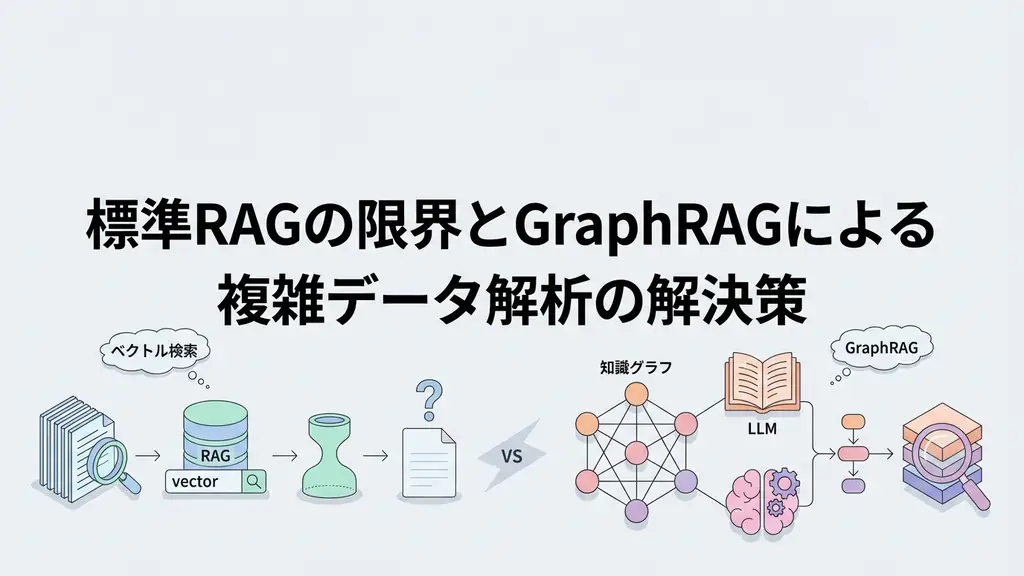
GraphRAG combines Knowledge Graphs with Retrieval-Augmented Generation to enable deeper understanding of entity relationships beyond simple semantic similarity.

How GraphRAG Works

1. Knowledge Graph Construction

# Extract entities and relationships
entities = extract_entities(documents)
relationships = extract_relationships(entities)

# Build graph
graph = build_knowledge_graph(entities, relationships)

2. Query Processing

# Parse query for entities
query_entities = extract_entities(query)

# Traverse graph
related_entities = graph.traverse(query_entities, depth=2)

# Retrieve context
context = retrieve_documents(related_entities)

3. Generation

Combine graph context with LLM for answer generation.

GraphRAG vs Standard RAG

FeatureStandard RAGGraphRAG
SearchVector similarityGraph traversal
RelationshipsImplicitExplicit
Multi-hopLimitedNative support
Use CaseDocument QAComplex reasoning

Implementation with Neo4j

from neo4j import GraphDatabase

# Connect to Neo4j
driver = GraphDatabase.driver(uri, auth=(user, password))

# Query knowledge graph
with driver.session() as session:
    result = session.run("""
        MATCH (p:Person)-[:WORKS_AT]->(c:Company)
        WHERE c.name = $company
        RETURN p.name
    """, company="OpenAI")

Use Cases

  • Medical Research: Drug interactions, disease pathways
  • Legal Analysis: Case precedents, jurisdiction relationships
  • Financial Analysis: Company ownership, market influences
  • Recommendation Systems: Product relationships, user preferences

🛠 Key Tools

ToolPurposeLink
Neo4jGraph DatabaseDetails
LangChainGraph IntegrationDetails
spaCyEntity ExtractionDetails

FAQ

Q1: What is the difference between GraphRAG and standard RAG?

Standard RAG uses vector similarity, GraphRAG uses entity relationships in knowledge graphs.

Q2: When should I use GraphRAG?

Use when you need to understand relationships between entities or perform multi-hop reasoning.

Q3: What are the main challenges?

Building and maintaining knowledge graphs requires significant effort.

Summary

GraphRAG excels at complex reasoning tasks requiring understanding of entity relationships. While more complex to implement than standard RAG, it enables powerful applications in domains like medicine, law, and finance.
Tag Cloud

#LLM (17) #ROI (16) #AI Agents (13) #Python (9) #RAG (9) #Digital Transformation (7) #AI (6) #LangChain (6) #AI Agent (5) #LLMOps (5) #Small and Medium Businesses (5) #Agentic Workflow (4) #AI Ethics (4) #Anthropic (4) #Cost Reduction (4) #Debugging (4) #DX Promotion (4) #Enterprise AI (4) #Multi-Agent (4) #2025 (3) #2026 (3) #Agentic AI (3) #AI Adoption (3) #AI ROI (3) #AutoGen (3) #LangGraph (3) #MCP (3) #OpenAI O1 (3) #Troubleshooting (3) #Vector Database (3) #AI Coding Agents (2) #AI Orchestration (2) #Automation (2) #Best Practices (2) #Business Strategy (2) #ChatGPT (2) #Claude (2) #CrewAI (2) #Cursor (2) #Development Efficiency (2) #DX (2) #Gemini (2) #Generative AI (2) #GitHub Copilot (2) #GraphRAG (2) #Inference Optimization (2) #Knowledge Graph (2) #Langfuse (2) #LangSmith (2) #LlamaIndex (2) #Management Strategy (2) #MIT Research (2) #Mixture of Experts (2) #Model Context Protocol (2) #MoE (2) #Monitoring (2) #Multimodal AI (2) #Privacy (2) #Quantization (2) #Reinforcement Learning (2) #Responsible AI (2) #Robotics (2) #SLM (2) #System 2 (2) #Test-Time Compute (2) #VLLM (2) #VLM (2) #.NET (1) #2025 Trends (1) #2026 Trends (1) #Adoption Strategy (1) #Agent Handoff (1) #Agent Orchestration (1) #Agentic Memory (1) #Agentic RAG (1) #AI Agent Framework (1) #AI Architecture (1) #AI Engineering (1) #AI Fluency (1) #AI Governance (1) #AI Implementation (1) #AI Implementation Failure (1) #AI Implementation Strategy (1) #AI Inference (1) #AI Integration (1) #AI Management (1) #AI Observability (1) #AI Safety (1) #AI Strategy (1) #AI Video (1) #Autonomous Coding (1) #Backend Optimization (1) #Backend Tasks (1) #Beginners (1) #Berkeley BAIR (1) #Business Automation (1) #Business Optimization (1) #Business Utilization (1) #Business Value (1) #Business Value Assessment (1) #Career Strategy (1) #Chain-of-Thought (1) #Claude 3.5 (1) #Claude 3.5 Sonnet (1) #Compound AI Systems (1) #Computer Use (1) #Constitutional AI (1) #CUA (1) #DeepSeek (1) #Design Pattern (1) #Development (1) #Development Method (1) #Devin (1) #Edge AI (1) #Embodied AI (1) #Entity Extraction (1) #Error Handling (1) #Evaluation (1) #Fine-Tuning (1) #FlashAttention (1) #Function Calling (1) #Google Antigravity (1) #Governance (1) #GPT-4o (1) #GPT-4V (1) #Green AI (1) #GUI Automation (1) #Image Recognition (1) #Implementation Patterns (1) #Implementation Strategy (1) #Inference (1) #Inference AI (1) #Inference Scaling (1) #Information Retrieval (1) #Kubernetes (1) #Lightweight Framework (1) #Llama.cpp (1) #LLM Inference (1) #Local LLM (1) #LoRA (1) #Machine Learning (1) #Mamba (1) #Manufacturing (1) #Microsoft (1) #Milvus (1) #MLOps (1) #Modular AI (1) #Multimodal (1) #Multimodal RAG (1) #Neo4j (1) #Offline AI (1) #Ollama (1) #On-Device AI (1) #OpenAI (1) #OpenAI Operator (1) #OpenAI Swarm (1) #Operational Efficiency (1) #Optimization (1) #PEFT (1) #Physical AI (1) #Pinecone (1) #Practical Guide (1) #Prediction (1) #Production (1) #Prompt Engineering (1) #PyTorch (1) #Qdrant (1) #QLoRA (1) #Reasoning AI (1) #Refactoring (1) #Retrieval (1) #Return on Investment (1) #Risk Management (1) #RLHF (1) #RPA (1) #Runway (1) #Security (1) #Semantic Kernel (1) #Similarity Search (1) #Skill Set (1) #Skill Shift (1) #Small Language Models (1) #Software Development (1) #Software Engineer (1) #Sora 2 (1) #SRE (1) #State Space Model (1) #Strategy (1) #Subsidies (1) #Sustainable AI (1) #Synthetic Data (1) #System 2 Thinking (1) #System Design (1) #TensorRT-LLM (1) #Text-to-Video (1) #Tool Use (1) #Transformer (1) #Trends (1) #TTC (1) #Usage (1) #Vector Search (1) #Video Generation (1) #VS Code (1) #Weaviate (1) #Weights & Biases (1) #Workstyle Reform (1) #World Models (1)