What is GraphRAG?
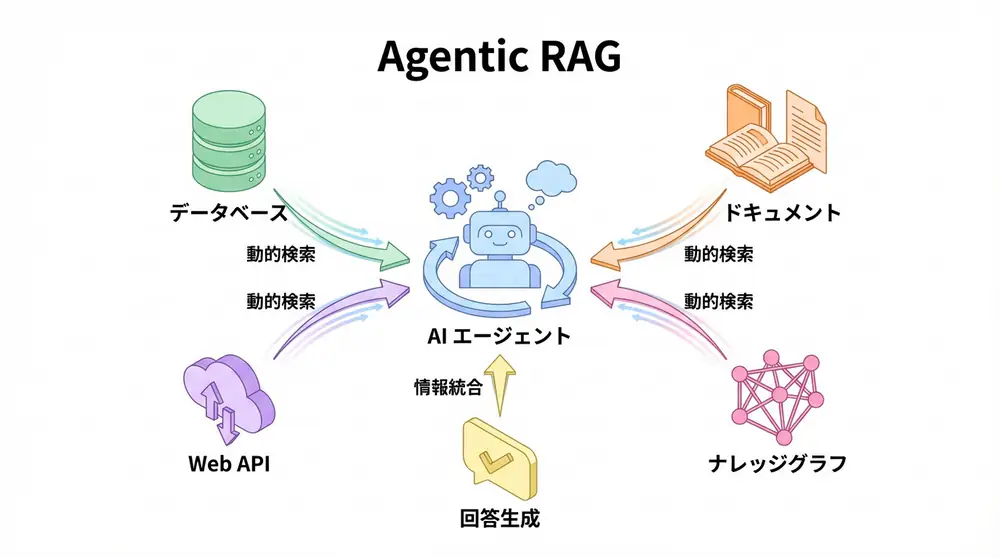
GraphRAG combines Knowledge Graphs with Retrieval-Augmented Generation to enable deeper understanding of entity relationships beyond simple semantic similarity.
How GraphRAG Works
1. Knowledge Graph Construction
# Extract entities and relationships
entities = extract_entities(documents)
relationships = extract_relationships(entities)

# Build graph
graph = build_knowledge_graph(entities, relationships)
2. Query Processing
# Parse query for entities
query_entities = extract_entities(query)

# Traverse graph
related_entities = graph.traverse(query_entities, depth=2)

# Retrieve context
context = retrieve_documents(related_entities)
3. Generation
Combine graph context with LLM for answer generation.
GraphRAG vs Standard RAG
| Feature | Standard RAG | GraphRAG |
|---|---|---|
| Search | Vector similarity | Graph traversal |
| Relationships | Implicit | Explicit |
| Multi-hop | Limited | Native support |
| Use Case | Document QA | Complex reasoning |
Implementation with Neo4j
from neo4j import GraphDatabase

# Connect to Neo4j
driver = GraphDatabase.driver(uri, auth=(user, password))

# Query knowledge graph
with driver.session() as session:
    result = session.run("""
        MATCH (p:Person)-[:WORKS_AT]->(c:Company)
        WHERE c.name = $company
        RETURN p.name
    """, company="OpenAI")
Use Cases
- Medical Research: Drug interactions, disease pathways
- Legal Analysis: Case precedents, jurisdiction relationships
- Financial Analysis: Company ownership, market influences
- Recommendation Systems: Product relationships, user preferences
🛠 Key Tools
| Tool | Purpose | Link |
|---|---|---|
| Neo4j | Graph Database | Details |
| LangChain | Graph Integration | Details |
| spaCy | Entity Extraction | Details |
FAQ
Q1: What is the difference between GraphRAG and standard RAG?
Standard RAG uses vector similarity, GraphRAG uses entity relationships in knowledge graphs.
Q2: When should I use GraphRAG?
Use when you need to understand relationships between entities or perform multi-hop reasoning.
Q3: What are the main challenges?
Building and maintaining knowledge graphs requires significant effort.
Summary
GraphRAG excels at complex reasoning tasks requiring understanding of entity relationships. While more complex to implement than standard RAG, it enables powerful applications in domains like medicine, law, and finance.