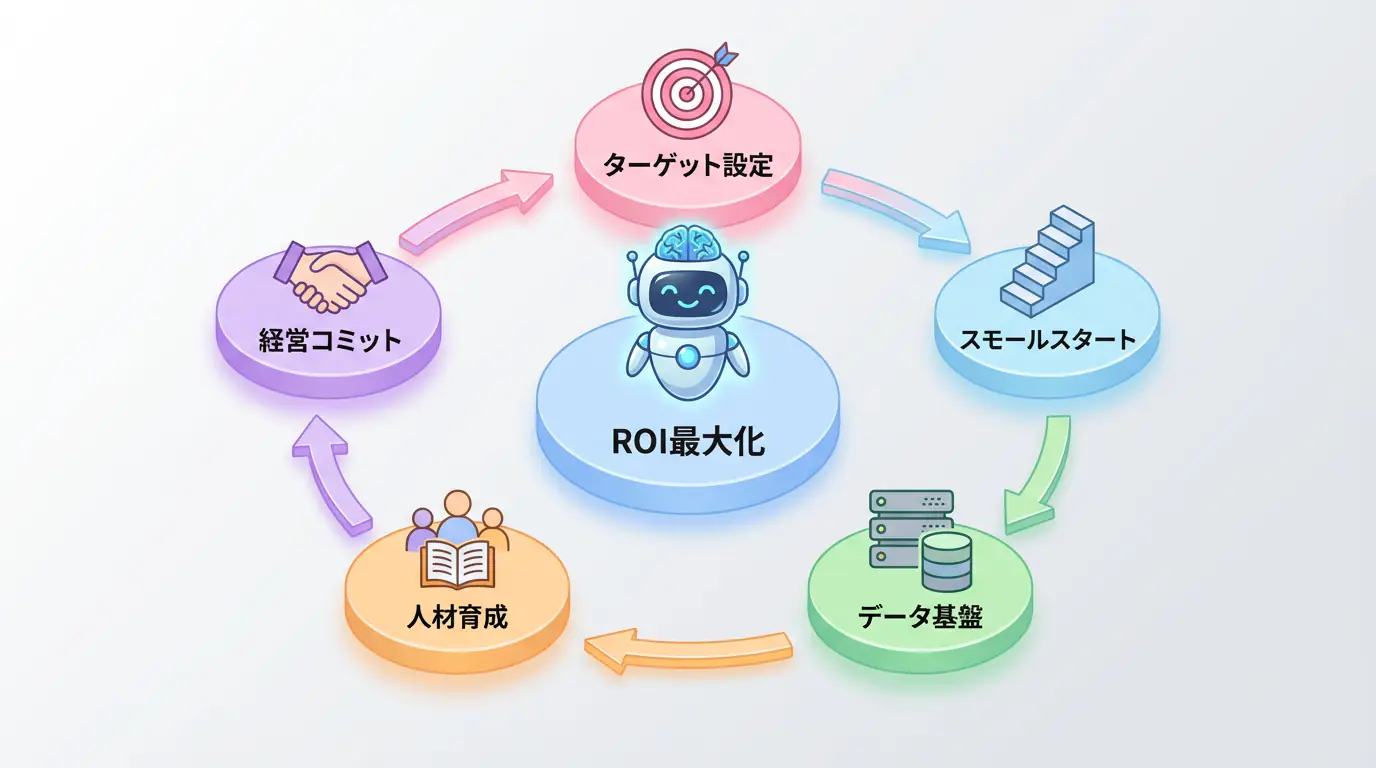
Introduction
Enterprise AI implementation requires significant investment. This guide shows how to achieve and measure ROI effectively.
ROI Measurement Framework
Quantitative Metrics
| Metric | Measurement | Example |
|---|---|---|
| Cost Reduction | Labor hours saved × hourly rate | $500K/year |
| Revenue Increase | New sales from AI capabilities | $2M/year |
| Productivity | Output per employee | +40% |
| Error Reduction | Cost of mistakes avoided | $300K/year |
Qualitative Metrics
- Employee satisfaction and retention
- Customer experience improvements
- Innovation and competitive advantage
- Brand reputation
Implementation Strategy
Phase 1: Pilot (Months 1-6)
- Select high-impact use case
- Build MVP with clear success metrics
- Measure and document results
Phase 2: Scale (Months 6-12)
- Expand to related use cases
- Integrate with existing systems
- Train team and establish best practices
Phase 3: Optimize (Months 12+)
- Continuous improvement
- Advanced use cases
- Strategic transformation
Success Stories
Manufacturing: Predictive Maintenance
- Investment: $2M
- ROI: 300% in 18 months
- Impact: 50% reduction in unplanned downtime
Financial Services: Fraud Detection
- Investment: $5M
- ROI: 450% in 24 months
- Impact: $20M in fraud prevented
🛠 Key Tools
| Tool | Purpose | Link |
|---|---|---|
| Tableau | ROI Dashboard | Details |
| Databricks | Analytics | Details |
| McKinsey AI Navigator | Strategy | Details |
FAQ
Q1: Timeline for ROI?
6-12 months for pilots, 12-24 months for full deployment.
Q2: Key metrics?
Quantitative (cost, revenue, productivity) and qualitative (satisfaction, experience).
Q3: Justifying investment?
Start with pilots, use benchmarks, show short and long-term value.
Summary
Successful enterprise AI requires clear metrics, phased implementation, and continuous measurement. Start with high-impact pilots and scale based on proven ROI.