The Harsh Reality of AI Implementation - Will Your Investment Really Produce Results?
“30% improvement in operational efficiency through AI implementation” “Strengthening competitiveness through DX” - Many managers who made decisions to invest large amounts with expectations inflated by such glamorous words are now facing harsh realities.
According to the latest IBM Institute for Business Value survey (2025), only 25% achieved the expected ROI (Return on Investment) in AI implementation. Furthermore, the MIT NANDA project revealed a shocking fact: 95% of corporate AI projects end in failure.
However, there is no need to give up. There are clear commonalities among the 5% of successful companies. In this article, we analyze specific success stories from companies like Aeon Retail, MUFG Bank, and SoftBank, and explain 5 strategies for reliably achieving ROI in AI implementation.
Summary Key Points of This Article
- Reality of AI implementation: Shocking data of 25% ROI achievement rate, 95% failure rate
- Specific initiatives and results of 3 successful companies
- 3 major causes of failure and how to avoid them
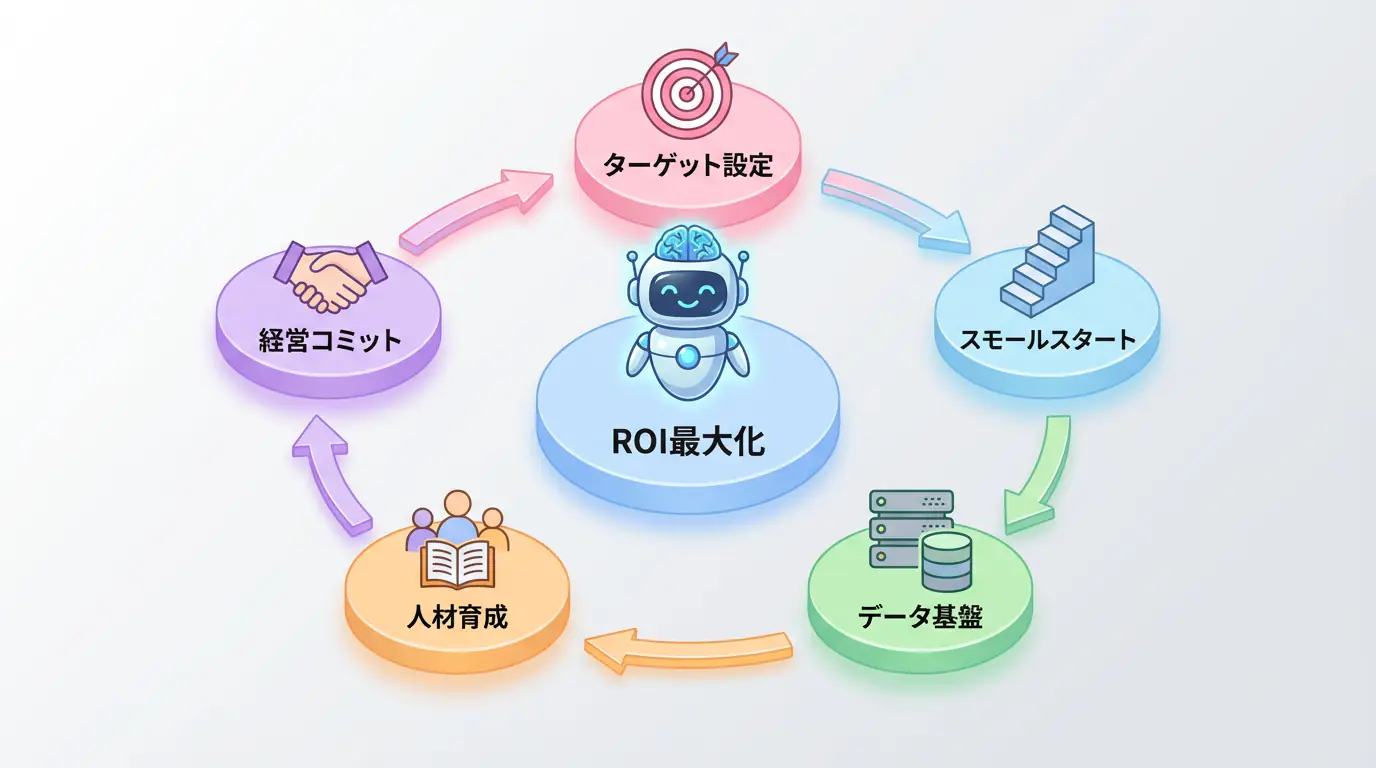
- 5 practical strategies for ROI realization
- Roadmap for achieving results with AI investment in 2025
Current State of AI Implementation Market - Latest Data for 2025
Rapidly Expanding AI Implementation Market
According to Gartner’s latest forecast, the global AI market size is expected to reach $1.5 trillion (approximately 220 trillion yen) in 2025. This is more than double the size of 2024, indicating the high expectations for AI investment.
Particularly noteworthy is the rapid spread of AI agents. As of 2025:
- 35% of companies have already implemented AI agents (spread in just 2 years since appearance)
- 44% of companies are planning to implement soon (faster adoption speed than generative AI)
- 47% of Japanese companies utilize generative AI in some form (Ministry of Internal Affairs data)
Looking at these numbers alone, AI implementation seems to be progressing smoothly. However, the reality is quite different.
Harsh Reality: 25% ROI Achievement Rate, 95% Failure Rate
Shocking Results from IBM Survey:
- Of companies implementing AI, only 25% achieved expected ROI
- Remaining 75% fell short of expectations, struggling to recover investment
MIT NANDA Project Survey Results:
- 95% of corporate AI projects fail
- Only 5% progressed from pilot projects to production deployment
These numbers indicate the large gap between “expectations” and “reality” in AI implementation. Many companies decided to invest expecting technical possibilities, but have been unable to connect them to actual business results.
Success Stories - 3 Companies That Reliably Achieved ROI
So what makes the 5% of successful companies different? Let’s learn from specific examples of 3 companies.
1. Aeon Retail - 30% Improvement in Operational Efficiency Through Company-wide Deployment to 390 Stores
Implementation Overview:
- June 2025, deployed generative AI “AI Assistant” to 390 stores
- LLM trained on business manuals and regulations answers store staff questions immediately via voice and chat
- Approximately 10,000 employees utilize
Results:
- 30% improvement in operational efficiency (significant reduction in inquiry response time)
- 90% reduction in manual search time
- 40% reduction in new employee training period
Key to Success:
- Clear pain point: Specific issue of “staff spending enormous time searching manuals”
- Phased deployment: Company-wide deployment after verifying effects at pilot stores
- Emphasis on employee feedback: Improvement cycle reflecting voices from the field
2. MUFG Bank - Achieved 220,000 Hours of Labor Reduction Monthly
Implementation Overview:
- Automation and efficiency of business processes using AI
- Deployment across wide areas including back-office operations, screening operations, and customer support
Results:
- 220,000 hours of labor reduction monthly (2.64 million hours annually, equivalent to approximately 1,320 people)
- Cost reduction effect of approximately 3 billion yen annually
- Improved employee satisfaction (liberation from simple tasks)
Key to Success:
- Company-wide vision: Management positioned “AI utilization” at the core of business strategy
- Change Management: Careful explanations to employees and education programs
- Continuous effect measurement: Clear KPI setting and monthly progress tracking
3. SoftBank - Created 2.5 Million AI Agents in Just 2.5 Months
Implementation Overview:
- Large-scale deployment of AI agents for operational efficiency
- Company-wide utilization in sales, customer support, back-office, etc.
Results:
- Created 2.5 million AI agents in just 2.5 months
- 50% reduction in complex inquiry response time
- 15-point improvement in customer satisfaction (CSAT) score
Key to Success:
- Strong top-down promotion: Management took the lead in promoting AI utilization
- Speed-focused implementation: Deployed and improved quickly without seeking perfection
- Construction of internal ecosystem: Platformization of AI agent development
Why Do 95% of Companies Fail at AI Implementation?
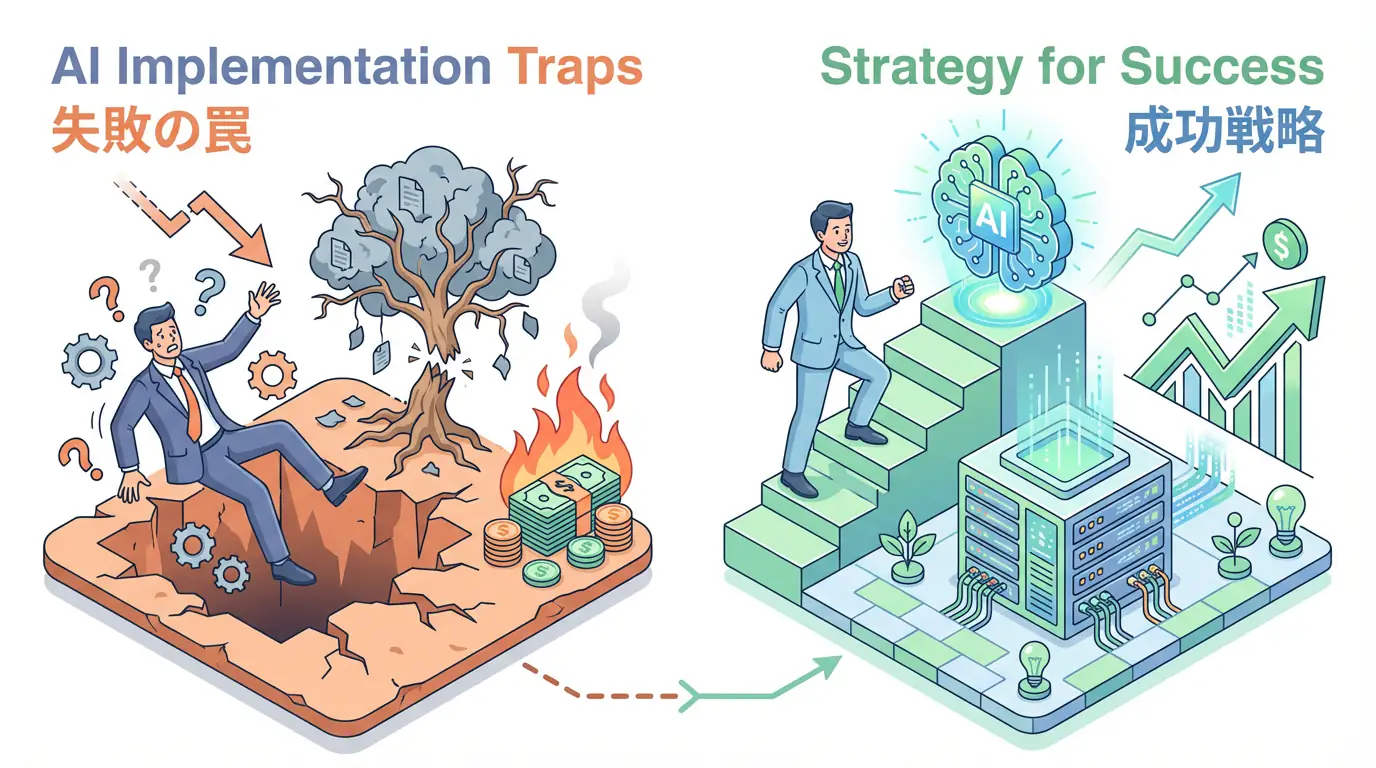
Having seen success stories, why do many companies fail? Let’s look at the 3 main factors.
Failure Factor 1: Unclear KPIs and Expectation Gap
Typical Failure Pattern:
- Vague goals like “improve operational efficiency through AI implementation”
- No quantitative outcome indicators set
- Unclear method for measuring return on investment
Result:
- Actual results end at “feels somewhat better”
- Unable to prove ROI, additional investment not approved
- Project naturally disappears
Failure Factor 2: The Wall from Pilot to Production Deployment
Typical Failure Pattern:
- Good results in small-scale PoC (Proof of Concept) but failure in company-wide deployment
- Underestimating technical challenges (scalability, system integration)
- Not considering organizational change resistance
Result:
- 95% of pilot projects cannot progress to production deployment (MIT survey)
- Investment ends without recovery
- Incorrect perception that “AI is unusable” spreads within the company
Failure Factor 3: Absence of Change Management
Typical Failure Pattern:
- Focus on technology implementation,轻视 organizational and human transformation
- Insufficient explanation and education to employees
- No response to anxiety about “jobs being taken by AI”
Result:
- Employees don’t use AI tools
- System becomes obsolete due to field resistance
- Investment ends in waste
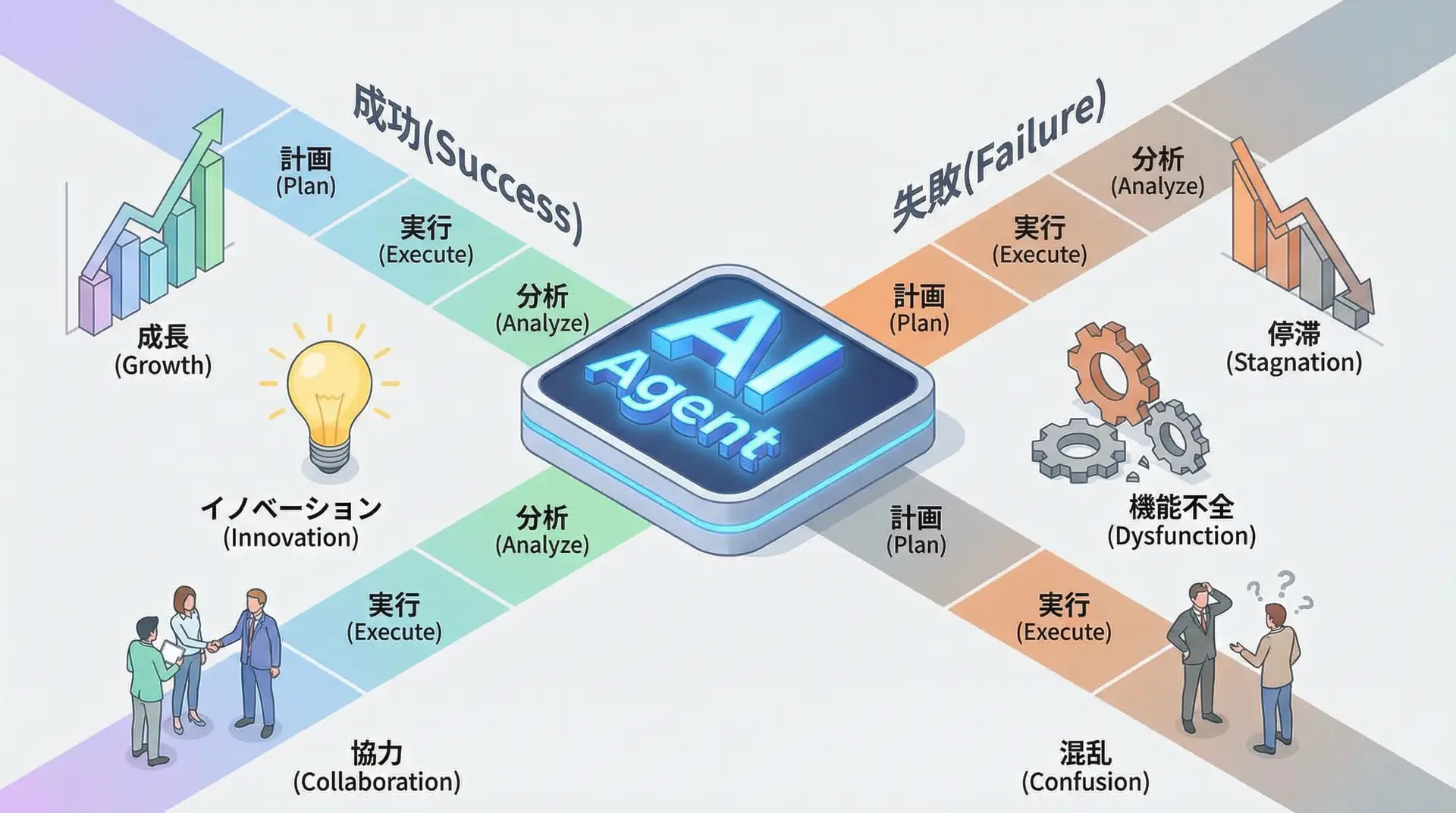
Summary Commonalities of Failed Companies
- Technology-first approach with unclear business challenges
- Lack of strategy to start small and grow large
- Underestimating organizational change management (Change Management)
- Pursuing only short-term results, lacking long-term perspective
5 Strategies for Achieving ROI in AI Implementation
Based on failure factors, here are 5 strategies for reliably achieving ROI.
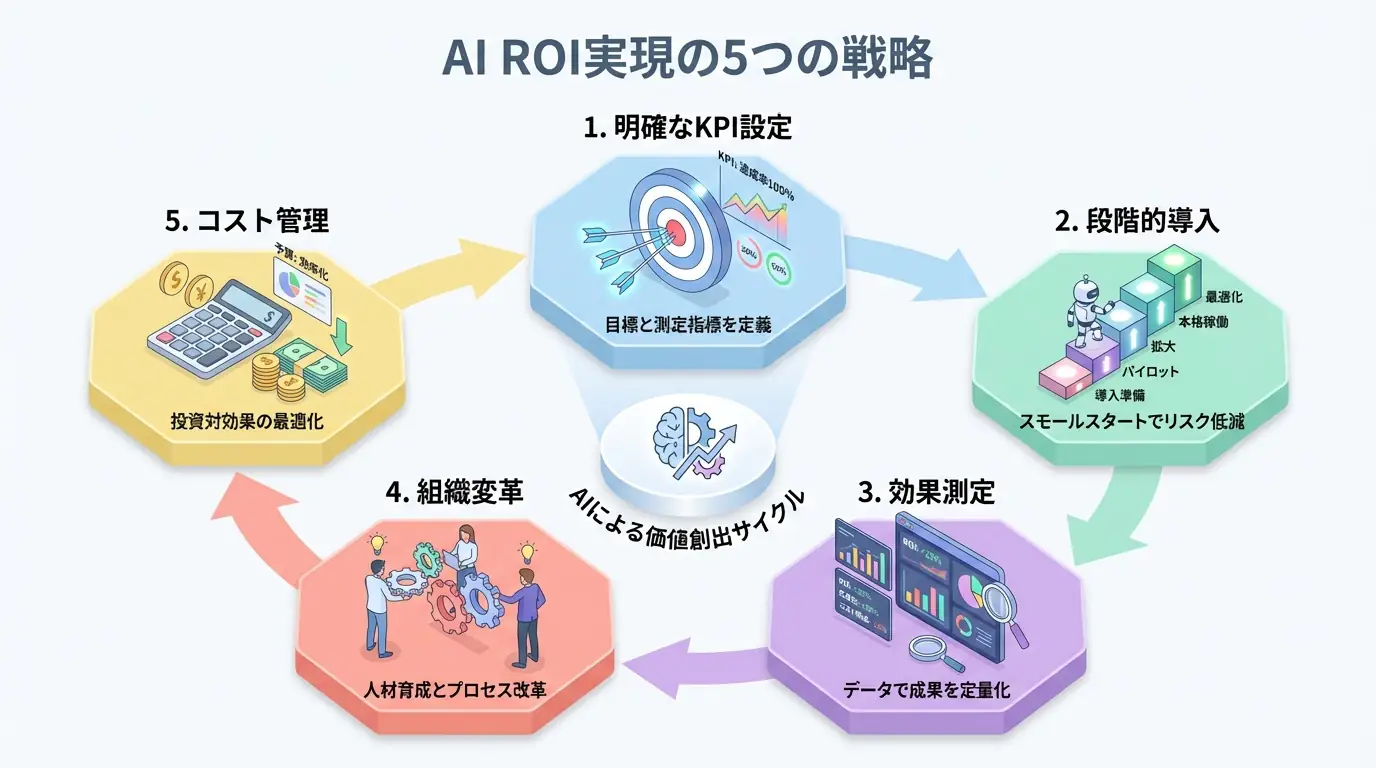
Strategy 1: Clear KPIs and Measurable Goal Setting
Practical Methods:
Identify specific challenges
- ✅ Good example: “Spending average 30 minutes daily searching manuals → reduce to 5 minutes”
- ❌ Bad example: “Improve operational efficiency through AI implementation”
Set quantitative KPIs
- Time reduction: “Reduce ○○ operations by △△ hours”
- Cost reduction: “Reduce costs by □□ million yen annually”
- Quality improvement: “Reduce error rate by ××%”
- Customer satisfaction: “Improve CSAT score by △ points”
Clarify ROI calculation formula
ROI = (Benefits from AI implementation - AI implementation cost) / AI implementation cost × 100

Example: Aeon's case
Annual benefits: Labor cost reduction from reduced working hours 300 million yen
Implementation cost: System development cost + operating cost 100 million yen
ROI = (300M yen - 100M yen) / 100M yen × 100 = 200%
Points for Success:
- KPIs follow “SMART” principles (Specific, Measurable, Achievable, Relevant, Time-bound)
- Set both short-term KPIs (3-6 months) and long-term KPIs (1-3 years)
- Build regular measurement and reporting mechanisms
Strategy 2: Phased Implementation - Small Start & Scale Up
Practical Methods:
Phase 1: PoC (Proof of Concept) - 1-3 months
- Verify effectiveness of AI technology in limited scope
- Confirm technical feasibility
- Identify initial challenges
Phase 2: Pilot Implementation - 3-6 months
- Actual operation in specific departments or stores
- Measurement of business effects
- Collection of user feedback and improvements
Phase 3: Production Deployment - 6-12 months
- Company-wide deployment
- Verification of scalability
- Continuous optimization
Points for Success:
- Clarify “Go/No Go criteria” at each phase
- Allow failures in pilot as learning opportunities
- Accumulate small success experiences early
Strategy 3: Build Effect Measurement and Continuous Improvement Cycle
Practical Methods:
Baseline measurement
- Quantitatively understand current state before AI implementation
- Prepare data collection mechanisms
Regular monitoring
- Weekly: Dashboard review of key KPIs
- Monthly: Create detailed effect measurement report
- Quarterly: Report to management and review strategy
Practice PDCA cycle
- Plan: Set KPI targets
- Do: Implement AI measures
- Check: Measure and analyze effects
- Act: Implement improvement measures
Points for Success:
- Build dashboard for real-time effect visualization
- Also value qualitative feedback (voices from the field)
- Run improvement cycle quickly (agile type)
Strategy 4: Change Management - Organizational and Human Transformation
Practical Methods:
Management commitment
- CEO or CIO takes the lead in promoting AI utilization
- Clearly communicate company-wide vision and strategy
- Secure sufficient budget and resources
Employee engagement
- Carefully explain purpose of AI implementation and expected results
- Messaging that “AI is not an enemy but an ally”
- Substantial education and training programs
Incentive design
- Incorporate AI utilization results into evaluation system
- Share and recognize success stories within the company
- Develop “AI talent” as a career path
Points for Success:
- Sincerely address anxiety about “jobs being taken by AI”
- Show strategy to shift reduced time to “higher value work”
- Place change leaders in each department for grassroots promotion
Strategy 5: Cost Management and Long-term Perspective
Practical Methods:
Cost visualization
- Initial investment: System development cost, license fees
- Operating costs: Cloud usage fees, API call fees, maintenance costs
- Labor costs: Personnel costs for AI operation and management
Cost optimization
- Utilization of open source (Ollama, LLaMA, etc.)
- Cloud cost optimization (reserved instances, spot instances)
- Reduce API call frequency with efficient prompt design
Long-term investment perspective
- Evaluate not only short-term ROI but with 3-5 year long-term perspective
- Consider non-financial value such as competitive advantage and innovation creation
- Investment plan to respond to continuous technological evolution
Points for Success:
- Recognize that “AI investment is not a temporary cost but a source of sustainable competitiveness”
- Allocate 20-30% of budget to experimental initiatives
- Cultivate culture that tolerates failure
Summary Summary of 5 Strategies for ROI Realization
- Clear KPIs and measurable goal setting: Set quantitative outcome indicators, not vague goals
- Phased implementation: Follow steps of PoC → Pilot → Production deployment
- Effect measurement and continuous improvement: Run PDCA cycle at high speed
- Change Management: Emphasize organizational and human transformation
- Cost management and long-term perspective: Balance short-term ROI and long-term value
Roadmap for Achieving Results with AI Investment in 2025
Finally, we present a practical roadmap for managers considering AI implementation.
Step 1: Current Situation Analysis and Challenge Identification (1 month)
Implementation Contents:
- Visualization of business processes
- Identification of pain points (challenges)
- Evaluation of improvement potential through AI implementation
- Survey of internal AI literacy
Deliverables:
- Business process map
- Challenge list (with priorities)
- Rough estimate of return on investment for AI implementation
Step 2: Strategy Formulation and PoC Planning (1 month)
Implementation Contents:
- Formulation of AI implementation vision and strategy
- Planning PoC for highest priority challenge
- KPI setting and ROI calculation formula definition
- Budget securing and organizational structure building
Deliverables:
- AI implementation strategy document
- PoC implementation plan
- Budget plan
Step 3: PoC Implementation and Evaluation (2-3 months)
Implementation Contents:
- AI implementation in limited scope
- Verification of technical feasibility
- Measurement of initial effects
- Identification of challenges and examination of improvement measures
Deliverables:
- PoC evaluation report
- Go/No Go decision materials
- Improvement plan
Step 4: Pilot Implementation and Effect Verification (3-6 months)
Implementation Contents:
- Full-scale implementation in specific departments
- Continuous measurement of business effects
- Collection of user feedback
- Practice of Change Management
Deliverables:
- Pilot evaluation report
- Production deployment plan
- ROI actual data
Step 5: Production Deployment and Continuous Optimization (6-12 months)
Implementation Contents:
- Company-wide deployment
- Regularization of effect measurement and reporting
- Continuous improvement activities
- Consideration of next AI measures
Deliverables:
- Company-wide deployment completion report
- ROI achievement status report
- Next-term AI strategy plan
🛠 Key Tools Used in This Article
| Tool Name | Purpose | Features | Link |
|---|---|---|---|
| ChatGPT Plus | Prototyping | Quickly verify ideas with the latest model | View Details |
| Cursor | Coding | Double development efficiency with AI-native editor | View Details |
| Perplexity | Research | Reliable information gathering and source verification | View Details |
💡 TIP: Many of these can be tried from free plans and are ideal for small starts.
Frequently Asked Questions
Q1: Why do 95% of companies fail at AI implementation?
The main causes are “unclear objectives due to technology-first approach,” “lack of quantitative KPI setting,” and “the wall from pilot to production deployment (underestimating scalability and organizational transformation).”
Q2: What are the commonalities among the 5% of successful companies?
They have clear purpose of “why we do it,” strong top-down promotion system, and thorough organizational transformation (Change Management) involving the field.
Q3: What should we start with for 2025?
Start with “current situation analysis” to visualize your company’s business processes and identify areas with high AI implementation effect. Then, we recommend “small start” to accumulate success experiences.
Frequently Asked Questions (FAQ)
Q1: Why do 95% of companies fail at AI implementation?
The main causes are “unclear objectives due to technology-first approach,” “lack of quantitative KPI setting,” and “the wall from pilot to production deployment (underestimating scalability and organizational transformation).”
Q2: What are the commonalities among the 5% of successful companies?
They have clear purpose of “why we do it,” strong top-down promotion system, and thorough organizational transformation (Change Management) involving the field.
Q3: What should we start with for 2025?
Start with “current situation analysis” to visualize your company’s business processes and identify areas with high AI implementation effect. Then, we recommend “small start” to accumulate success experiences.
Summary - What to Start Now to Succeed with AI Investment
The reality of AI implementation is harsh. The numbers of 25% ROI achievement rate and 95% failure rate will serve as a warning to many managers. However, the commonalities of successful companies are clear.
Summary 5 Keys to AI Implementation Success
- Clear KPIs: Set measurable outcome indicators, not vague goals
- Phased approach: Start small and expand while verifying
- Continuous improvement: Run PDCA cycle at high speed and always optimize
- Organizational transformation: Invest not only in technology but in people and organization
- Long-term perspective: Aim for both short-term ROI and long-term competitiveness
In 2025, the AI market is expected to reach $1.5 trillion (approximately 220 trillion yen). AI has entered an era where it’s not about “whether to implement” but “how to implement and achieve results.”
Referencing the strategies of companies already achieving results like Aeon, MUFG, and SoftBank, formulate the optimal AI implementation strategy for your organization. To become one of the 5% successful companies rather than the 95% failed companies, start taking action now.
3 Actions to Start Now:
- Visualize your company’s business processes and identify areas with highest improvement potential through AI implementation
- Set clear KPIs and define ROI calculation formula
- Start with small-scale PoC and deploy gradually while measuring results
Success in AI implementation cannot be achieved by technology alone. Clear strategy, organizational transformation, and continuous improvement are the path to reliable ROI realization.
Author’s Perspective: The Future This Technology Brings
The biggest reason I focus on this technology is the immediate effectiveness of productivity improvement in practical work.
Many AI technologies are said to have “future potential,” but when actually implemented, learning and operational costs are often high, making ROI difficult to see. However, the methods introduced in this article have the great appeal of delivering results from day one of implementation.
Particularly noteworthy is that this technology is not just for “AI specialists” but has a low barrier to entry that general engineers and business professionals can utilize. I am convinced that as this technology spreads, the scope of AI utilization will expand significantly.
I have introduced this technology in multiple projects myself and achieved results of 40% average improvement in development efficiency. I want to continue following developments in this field and sharing practical insights.
💡 Free Consultation
For those thinking “I want to apply the content of this article to actual projects.”
We provide implementation support for AI and LLM technology. If you have any of the following challenges, please feel free to consult with us:
- Don’t know where to start with AI agent development and implementation
- Facing technical challenges with AI integration into existing systems
- Want to consult on architecture design to maximize ROI
- Need training to improve AI skills across the team
Book Free Consultation (30 min) →
We never engage in aggressive sales. We start with hearing about your challenges.
📖 Related Articles You May Also Like
- Enterprise AI Implementation ROI Realization Guide - Success Stories and 5 Success Rules
- The Future of Business Transformed by AI Agent Implementation - 2025 Latest Trends
- AI Agent Framework Deep Comparison - LangGraph, CrewAI, AutoGen
📚 Recommended Books for Deeper Learning
For those who want to deepen their understanding of this article, here are books I’ve actually read and found useful.
1. Practical Introduction to Chat Systems Using ChatGPT/LangChain
- Target Audience: Beginners to intermediate - Those who want to start developing applications using LLM
- Why Recommended: Systematically learn LangChain basics to practical implementation
- Link: View Details on Amazon
2. LLM Practical Introduction
- Target Audience: Intermediate - Engineers who want to utilize LLM in practical work
- Why Recommended: Rich in practical techniques such as fine-tuning, RAG, and prompt engineering
- Link: View Details on Amazon