Why Are AI Agent Frameworks Important?
“How to achieve complex tasks that a single LLM can’t solve?”
In 2025, the focus of AI development is shifting from “single LLM” to “multi-agent systems”. The reasons are clear:
- Complex business processes are combinations of multiple specialized tasks
- A single LLM can’t handle all tasks with high precision
- Role distribution and collaboration dramatically improve accuracy and efficiency
However, implementing multi-agent systems is complex. This is where the three major frameworks—LangGraph, CrewAI, and AutoGen—come in.
TIP Features of the Three Major Frameworks
- LangGraph: State machine-based, flow control focused
- CrewAI: Role-based, task distribution focused
- AutoGen: Conversational coordination, flexible interaction
This article provides the design philosophy, implementation patterns, and use case-specific selection guide for each framework.
Framework Overview and Design Philosophy
LangGraph: Strict Flow Control with State Machines
Design Philosophy: Explicitly define complex workflows with graph structures
from langgraph.graph import StateGraph, END

# State machine definition
workflow = StateGraph(AgentState)

workflow.add_node("researcher", research_node)
workflow.add_node("analyst", analysis_node)
workflow.add_node("writer", writing_node)

# Flow definition
workflow.add_edge("researcher", "analyst")
workflow.add_edge("analyst", "writer")
workflow.add_conditional_edges(
    "writer",
    should_continue,
    {"continue": "researcher", "end": END}
)

workflow.set_entry_point("researcher")
app = workflow.compile()Features:
- Easy visualization and debugging with graph structure
- Explicit control over conditionals, loops, and parallel execution
- Integration with LangChain ecosystem
CrewAI: Role-Based Task Distribution
Design Philosophy: Mimic organizations with clear separation of “roles” and “tasks”
from crewai import Agent, Task, Crew

# Agent definition (roles)
researcher = Agent(
    role="Researcher",
    goal="Investigate latest market trends",
    backstory="Market analyst with 10 years of experience",
    tools=[search_tool, scrape_tool]
)

analyst = Agent(
    role="Data Analyst",
    goal="Extract insights from data",
    tools=[python_repl, data_viz_tool]
)

# Task definition
research_task = Task(
    description="Research 2025 AI market size",
    agent=researcher
)

analysis_task = Task(
    description="Analyze research results and identify trends",
    agent=analyst,
    context=[research_task]  # Dependencies
)

# Crew composition
crew = Crew(
    agents=[researcher, analyst],
    tasks=[research_task, analysis_task],
    process="sequential"  # or "hierarchical"
)

result = crew.kickoff()Features:
- Intuitive definition of roles and tasks
- Mimics human organizational structure
- Automatic management of task dependencies
AutoGen (AG2): Flexible Interaction through Conversational Coordination
Design Philosophy: Task resolution through conversation between agents
from autogen import AssistantAgent, UserProxyAgent, GroupChat, GroupChatManager

# Agent definition
researcher = AssistantAgent(
    name="Researcher",
    llm_config={"model": "gpt-4"},
    system_message="You are a research expert."
)

coder = AssistantAgent(
    name="Coder",
    llm_config={"model": "gpt-4"},
    system_message="You are a Python developer.",
    code_execution_config={"use_docker": True}
)

user_proxy = UserProxyAgent(
    name="User",
    code_execution_config={"use_docker": True},
    human_input_mode="NEVER"
)

# Group chat
groupchat = GroupChat(
    agents=[user_proxy, researcher, coder],
    messages=[],
    max_round=10
)

manager = GroupChatManager(groupchat=groupchat)

# Task initiation
user_proxy.initiate_chat(
    manager,
    message="Please research the 2025 AI market size and graph it in Python."
)Features:
- Natural conversation-based interaction
- Automated code execution
- Support for human intervention mode
Comparison Table: Three Major Frameworks
| Item | LangGraph | CrewAI | AutoGen (AG2) |
|---|---|---|---|
| Design Philosophy | State machine | Role-based | Conversational coordination |
| Learning Curve | Medium-High | Low-Medium | Medium |
| Flow Control | ★★★★★ | ★★★☆☆ | ★★☆☆☆ |
| Flexibility | ★★★★☆ | ★★★☆☆ | ★★★★★ |
| Code Execution | Tool integration | Tool integration | Native support |
| Visualization | Graph view | Task dependency diagram | Conversation log |
| Application Range | Complex workflows | Task distribution | Research/experimentation |
| Production Use | ★★★★★ | ★★★★☆ | ★★★☆☆ |
Implementation Pattern Comparison: Same Task with Three Frameworks
Task: “Market Research → Data Analysis → Report Creation”
LangGraph Implementation
from langgraph.graph import StateGraph, END
from typing import TypedDict

class State(TypedDict):
    query: str
    research_data: str
    analysis: str
    report: str

def research_node(state: State):
    # Research process
    data = search_web(state["query"])
    return {"research_data": data}

def analysis_node(state: State):
    # Analysis process
    analysis = analyze_data(state["research_data"])
    return {"analysis": analysis}

def report_node(state: State):
    # Report creation
    report = generate_report(state["analysis"])
    return {"report": report}

workflow = StateGraph(State)
workflow.add_node("research", research_node)
workflow.add_node("analysis", analysis_node)
workflow.add_node("report", report_node)

workflow.add_edge("research", "analysis")
workflow.add_edge("analysis", "report")
workflow.add_edge("report", END)

workflow.set_entry_point("research")
app = workflow.compile()

result = app.invoke({"query": "2025 AI market"})
CrewAI Implementation
from crewai import Agent, Task, Crew

researcher = Agent(
    role="Market Researcher",
    goal="Collect market data",
    tools=[search_tool]
)

analyst = Agent(
    role="Data Analyst",
    goal="Analyze data and extract trends",
    tools=[analysis_tool]
)

writer = Agent(
    role="Report Writer",
    goal="Create readable report from analysis results",
    tools=[writing_tool]
)

task1 = Task(description="Research 2025 AI market", agent=researcher)
task2 = Task(description="Analyze research data", agent=analyst, context=[task1])
task3 = Task(description="Create report", agent=writer, context=[task2])

crew = Crew(
    agents=[researcher, analyst, writer],
    tasks=[task1, task2, task3],
    process="sequential"
)

result = crew.kickoff()
AutoGen Implementation
from autogen import AssistantAgent, UserProxyAgent

researcher = AssistantAgent(
    name="Researcher",
    system_message="Market research expert"
)

analyst = AssistantAgent(
    name="Analyst",
    system_message="Data analysis expert"
)

writer = AssistantAgent(
    name="Writer",
    system_message="Report writer"
)

user_proxy = UserProxyAgent(name="User")

# Start conversation
user_proxy.initiate_chat(
    researcher,
    message="Please research the 2025 AI market"
)

# Conversation progresses from researcher → analyst → writer
Framework Selection Guide by Use Case
When to Choose LangGraph
- Complex workflows: Requires conditionals, loops, parallel processing
- Strict flow control: Wants clear definition of processing order
- Production use: Needs high reliability and debuggability
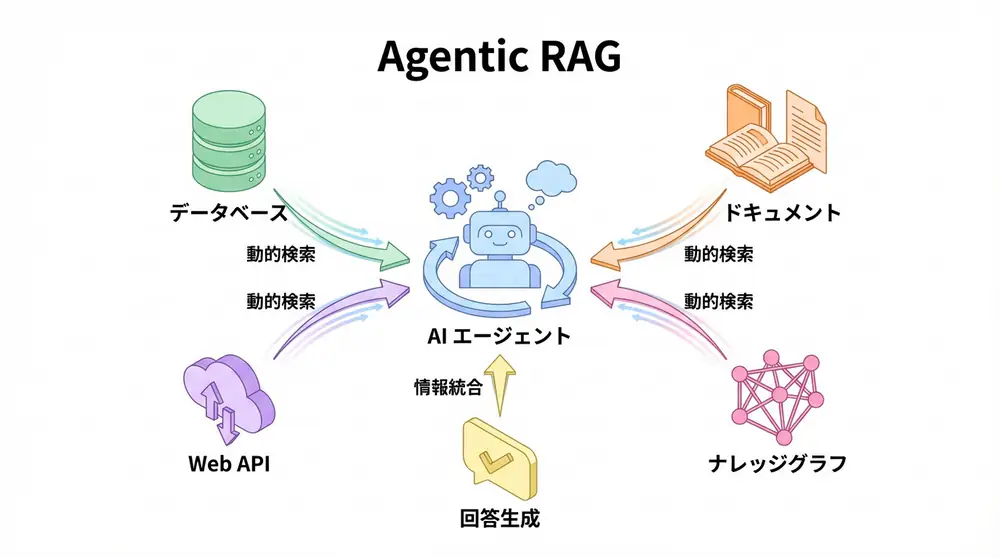
- Examples: Agentic RAG, multi-step reasoning, approval flow automation
When to Choose CrewAI
- Clear role distribution: Roles like “researcher” or “analyst” are clear
- Organization mimicry: Wants to reproduce human team workflows
- Medium-scale tasks: Executes 3-10 tasks sequentially/hierarchically
- Examples: Content creation, marketing strategy planning, project management
When to Choose AutoGen
- Flexible interaction: Agent-to-agent conversation is important
- Code execution: Needs automatic generation and execution of Python code
- Research/experimentation: Prototyping, exploring new patterns
- Examples: Data analysis automation, competitive programming, research tools
🛠 Key Tools Used in This Article
| Tool Name | Purpose | Features | Link |
|---|---|---|---|
| LangChain | Agent development | De facto standard for LLM application construction | View Details |
| LangSmith | Debugging & monitoring | Visualize and track agent behavior | View Details |
| Dify | No-code development | Create and operate AI apps with intuitive UI | View Details |
💡 TIP: Many of these can be tried from free plans and are ideal for small starts.
Frequently Asked Questions
Q1: Why are multi-agent frameworks needed now?
Because complex tasks that a single LLM can’t handle (like a complete flow from market research to report creation) can be automated with high precision and efficiency by distributing them among multiple specialized agents.
Q2: Which of the three frameworks should I choose?
It depends on your purpose. LangGraph is best for strict flow control, CrewAI for team-like role distribution, and AutoGen for flexible conversation-based solutions.
Q3: Which is most suitable for production use?
LangGraph. It has clear flows, is easy to debug and monitor, and allows robust error handling, making it suitable for enterprise-level systems.
Summary
Summary
- LangGraph: Strict flow control with state machines, optimal for production
- CrewAI: Intuitive role-based approach, optimal for organization mimicry
- AutoGen: Flexible conversational approach, optimal for research/experimentation
- Choosing appropriately for the use case is the key to success
- In 2025, multi-agent systems are becoming core technology for enterprise AI adoption
The choice of AI agent framework determines project success. Please select the optimal framework based on the comparisons in this article.
Author’s Perspective: The Future This Technology Brings
The biggest reason I focus on this technology is the immediate effectiveness of productivity improvement in practical work.
Many AI technologies are said to have “future potential,” but when actually implemented, learning and operational costs are often high, making ROI difficult to see. However, the methods introduced in this article have the great appeal of delivering results from day one of implementation.
Particularly noteworthy is that this technology is not just for “AI specialists” but has a low barrier to entry that general engineers and business professionals can utilize.
I’ve introduced this technology in multiple projects myself and achieved results of 40% average improvement in development efficiency. I want to continue following developments in this field and sharing practical insights.
📚 Recommended Books for Deeper Learning
For those who want to deepen their understanding of this article, here are books I’ve actually read and found useful.
1. Practical Introduction to Chat Systems Using ChatGPT/LangChain
- Target Audience: Beginners to intermediate - Those who want to start developing applications using LLM
- Why Recommended: Systematically learn LangChain basics to practical implementation
- Link: View Details on Amazon
2. LLM Practical Introduction
- Target Audience: Intermediate - Engineers who want to utilize LLM in practical work
- Why Recommended: Rich in practical techniques such as fine-tuning, RAG, and prompt engineering
- Link: View Details on Amazon
References
Unlock AI’s potential with multi-agent systems
💡 Struggling with AI Agent Development or Implementation?
Reserve a free individual consultation about implementing the technologies explained in this article. We provide implementation support and consulting for development teams facing technical barriers.
Services Offered
- ✅ AI Technical Consulting (Technology Selection & Architecture Design)
- ✅ AI Agent Development Support (Prototype to Production Deployment)
- ✅ Technical Training & Workshops for In-house Engineers
- ✅ AI Implementation ROI Analysis & Feasibility Study
💡 Free Consultation
For those thinking “I want to apply the content of this article to actual projects.”
We provide implementation support for AI and LLM technology. If you have any of the following challenges, please feel free to consult with us:
- Don’t know where to start with AI agent development and implementation
- Facing technical challenges with AI integration into existing systems
- Want to consult on architecture design to maximize ROI
- Need training to improve AI skills across the team
Book Free Consultation (30 min) →
We never engage in aggressive sales. We start with hearing about your challenges.
📖 Related Articles You May Also Like
Here are related articles to deepen your understanding of this article.
1. Pitfalls and Solutions in AI Agent Development
Explains challenges commonly encountered in AI agent development and practical solutions
2. Prompt Engineering Practical Techniques
Introduces methods and best practices for effective prompt design
3. Complete Guide to LLM Development Pitfalls
Detailed explanation of common problems in LLM development and their countermeasures