Introduction
AI agent development is powerful but full of pitfalls. This guide covers common mistakes and their solutions based on real-world experience in 2025.
Common Pitfalls
1. Over-Engineering Architecture
Mistake: Building complex multi-agent systems from day one.
Solution:
- Start with a single agent
- Add complexity only when justified
- Use simple ReAct pattern initially
2. Poor Prompt Design
Mistake: Vague prompts leading to inconsistent behavior.
Solution:
- Use structured system prompts
- Include few-shot examples
- Version control your prompts
- A/B test variations
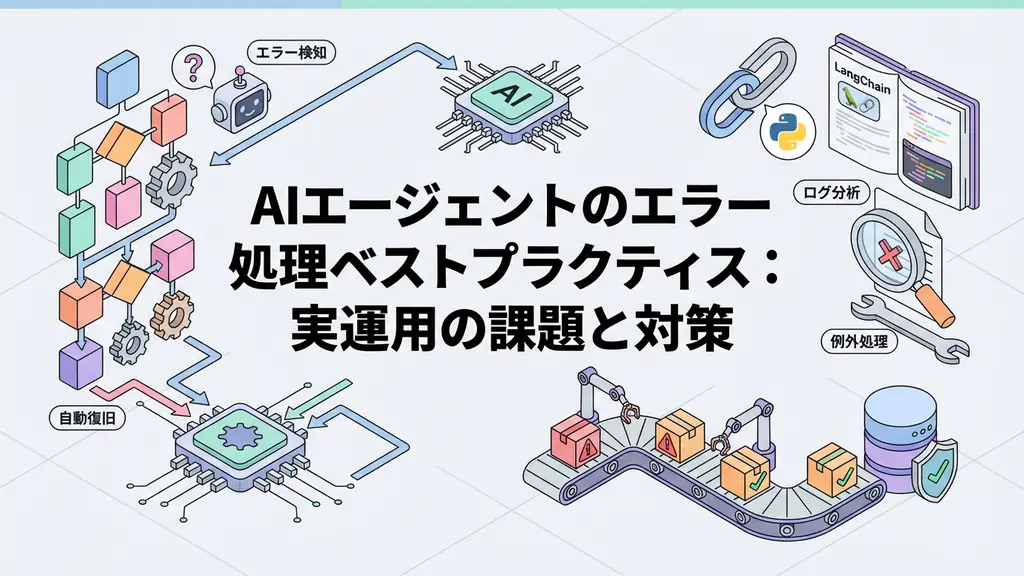
3. Inadequate Error Handling
Mistake: Agents failing silently or looping forever.
Solution:
# Set maximum iterations
max_iterations = 10

# Implement timeout
with timeout(seconds=30):
    result = agent.run(task)

# Add circuit breaker
if error_count > threshold:
    fallback_to_human()
4. Ignoring Context Limits
Mistake: Exceeding token limits causing truncated context.
Solution:
- Monitor token usage
- Implement context summarization
- Use sliding window for long conversations
5. Insufficient Testing
Mistake: Testing only happy paths.
Solution:
- Test edge cases and failures
- Use evaluation frameworks
- Implement continuous monitoring
Best Practices
| Practice | Implementation |
|---|---|
| Start Simple | Single agent → Multi-agent |
| Observability | LangSmith or similar tools |
| Version Control | Prompts and configurations |
| Gradual Rollout | Canary deployments |
| Human Oversight | Human-in-the-loop for critical tasks |
🛠 Key Tools
| Tool | Purpose | Link |
|---|---|---|
| LangSmith | Observability | Details |
| PromptLayer | Prompt Management | Details |
| Weights & Biases | Experiment Tracking | Details |
FAQ
Q1: Most common mistake?
Over-engineering. Start simple and add complexity gradually.
Q2: How to handle hallucinations?
Use RAG, fact-checking, and human-in-the-loop for critical tasks.
Q3: Testing strategy?
Combine unit tests, integration tests, and output quality evaluation.
Summary
Successful AI agent development requires starting simple, designing robust prompts, handling errors gracefully, and implementing comprehensive testing.