AI Agent Implementation is No Longer an Option
“Should we introduce AI agents?” — This question no longer has meaning. According to a joint survey by BCG and MIT Sloan Management Review, 35% of companies have already introduced AI agents as of 2025, with another 44% planning to do so [1]. This is an astonishing figure achieved in just two years since their emergence, surpassing the adoption speed of generative AI.
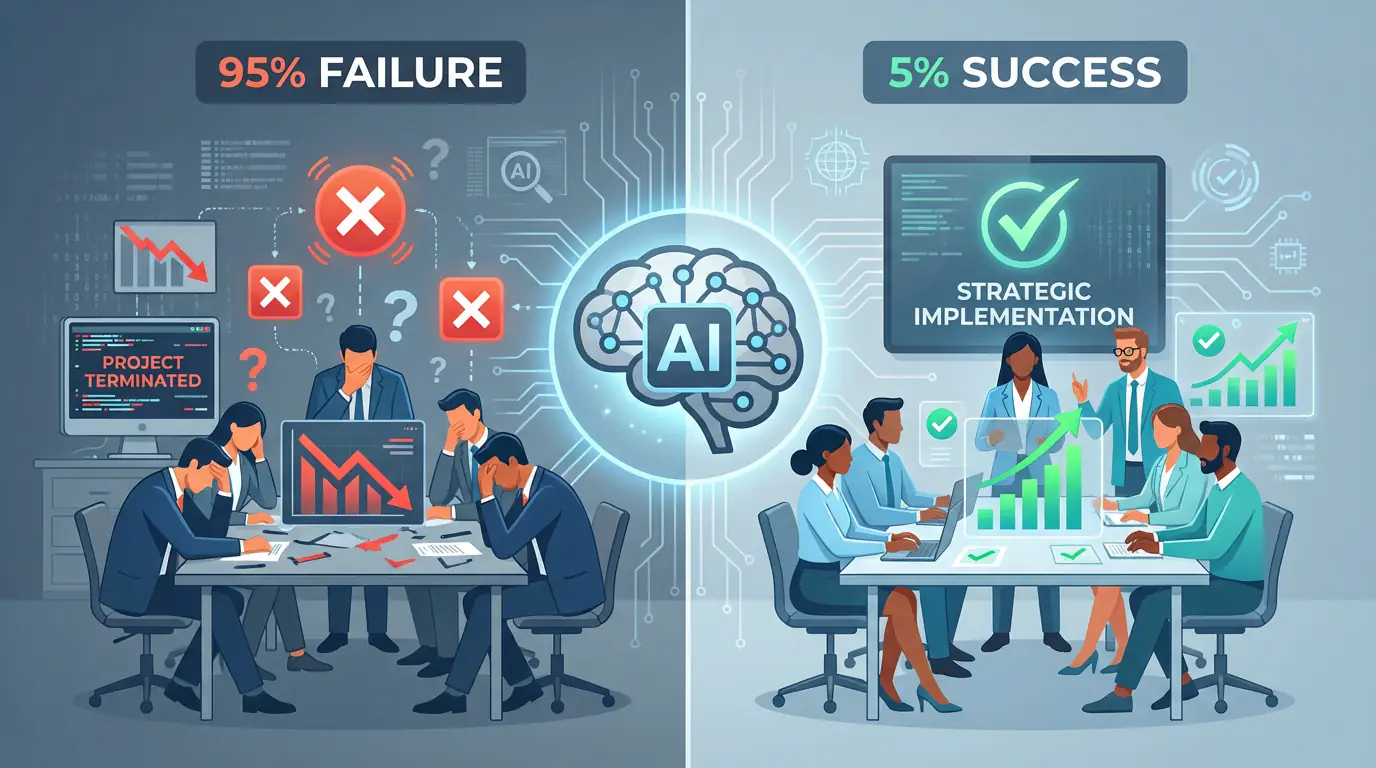
However, it’s also true that approximately half of companies that introduced AI responded that they “haven’t achieved the expected results” according to Yano Research Institute [2]. Whether it ends with mere “introduction” or transforms into true “competitive advantage” depends on the strategy of management.
In this article, we explain the business impact brought by AI agents, analyze success stories from companies like AEON and Panasonic, and propose 5 practical strategies for management to maximize ROI.
Why AI Agents Now? The Essence of Business Impact
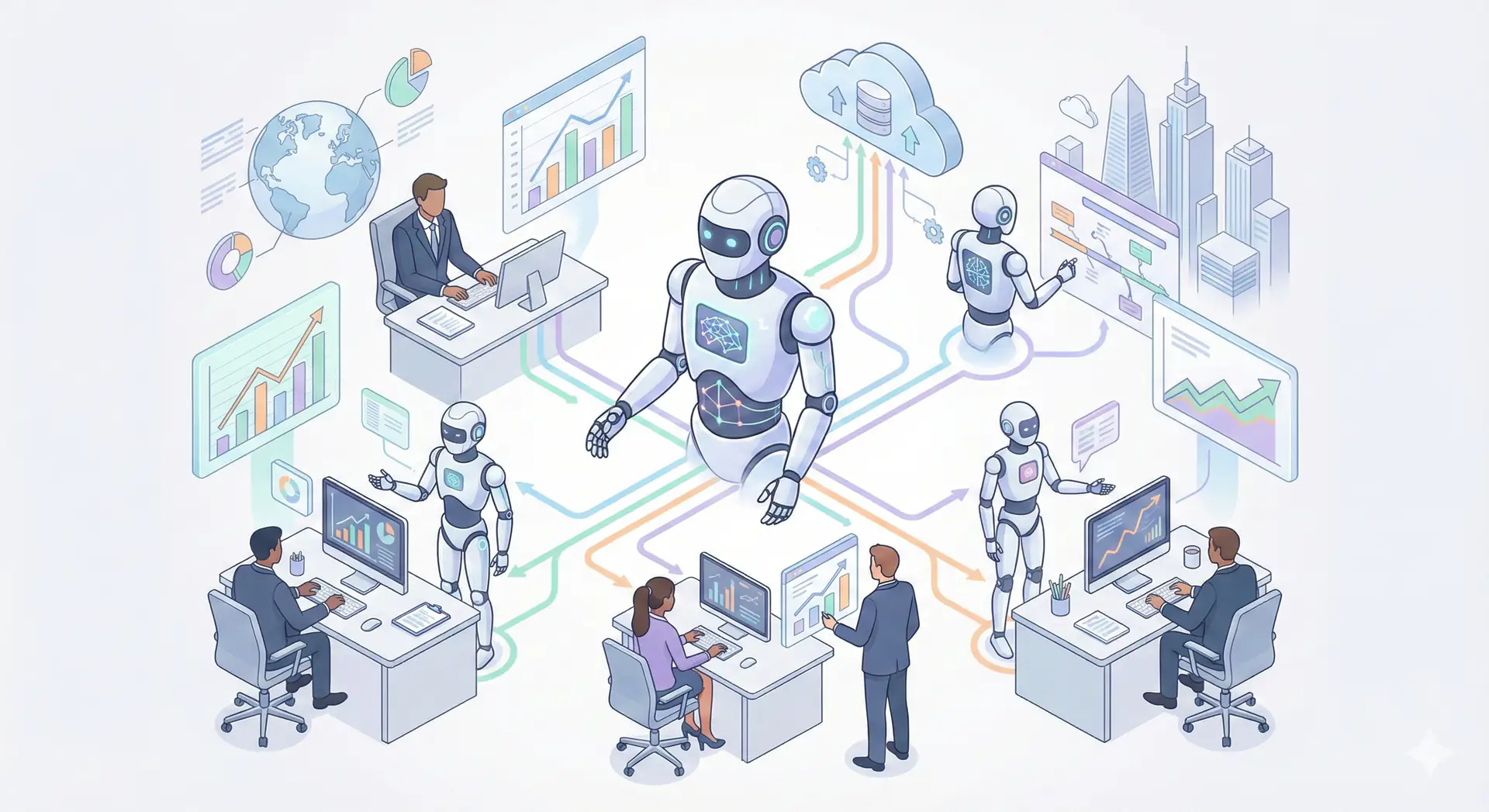
AI agents are not just tools for improving operational efficiency. They are “digital workers” that autonomously plan and execute tasks, learn and adapt, and possess the potential to fundamentally transform how businesses operate.
| Impact | Specific Value |
|---|---|
| Dramatic Productivity Improvement | Complete automation of routine work. Panasonic Connect achieved annual reduction of 186,000 work hours [3]. |
| Enhanced Decision Making | High-precision demand forecasting and management decisions based on data. Otsuka Shokai tripled their number of business negotiations [3]. |
| Creation of New Customer Experiences | 24/7 personalized customer support. |
| Improved Employee Engagement | Freed from simple tasks to focus on more creative work. 95% of employees at advanced companies responded that “job satisfaction has improved” [1]. |
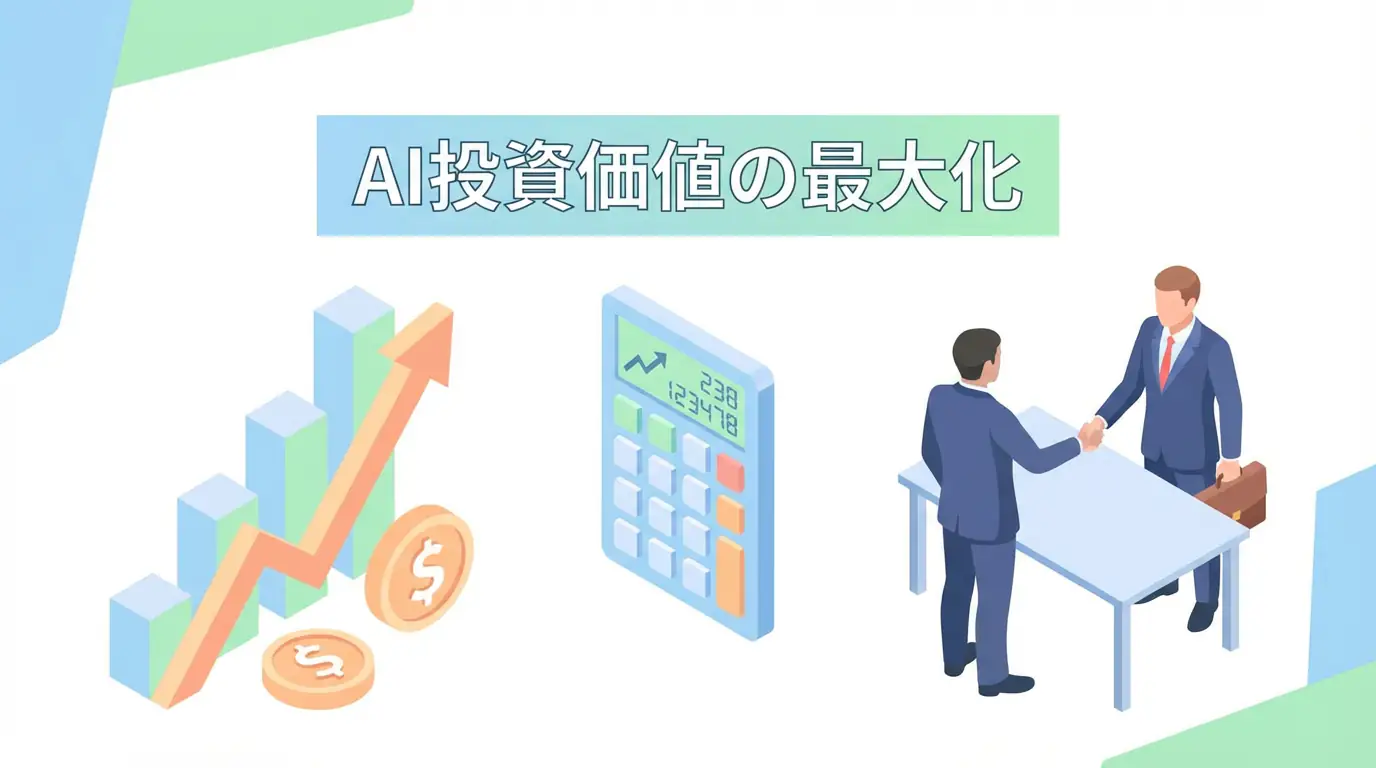
BCG’s survey shows that 73% of advanced companies responded that “utilizing AI agents enhances competitive advantage” [1]. This suggests that AI agents are not just cost-cutting tools but strategic investments that accelerate business growth.
The Reality of “AI Management” Learned from Success Stories
In Japan as well, many companies are utilizing AI agents and achieving concrete results.
Case 1: AEON Retail - “AI Assistant” at 390 Stores
AEON Retail introduced generative AI “AI Assistant” company-wide. They automated responses to store inquiries and product information searches, creating an environment where employees can concentrate on core tasks such as customer service and sales floor development. As a result, they achieved remarkable results with 30% improvement in operational efficiency.
Case 2: SoftBank - 2.5 Million AI Agents in Just 2.5 Months
SoftBank provided an AI agent development environment for approximately 20,000 employees. In just 2.5 months, 2.5 million AI agents were created, and automation of various tasks such as document creation, meeting minutes, and translation is progressing. This is an excellent example showing how powerful bottom-up AI utilization can be.
Case 3: MUFG Bank - Targeting Monthly Reduction of 220,000 Work Hours
MUFG Bank has set a goal of reducing labor hours by 220,000 hours per month using generative AI. They are promoting utilization mainly in back-office operations such as searching and summarizing internal documents and creating approval documents, leading productivity revolution in the financial industry.
5 Practical Strategies for Maximizing ROI
So how can we successfully implement AI agents and maximize ROI? Here are 5 strategies that management should lead to avoid the “technology-first trap” that many failing companies fall into.
Strategy 1: Clarify Objectives - “What For” Are You Using AI?
The most important thing is to clarify the objective of “what you want to solve with AI.” 95% of failing companies proceed with PoC (Proof of Concept) with ambiguous objectives (MIT research).
Action Plan
- Inventory Challenges: Visualize business processes and identify challenges from the perspectives of “time,” “cost,” and “quality.”
- Set KPIs: Set quantitative, measurable KPIs such as “30% reduction in inquiry response time” or “15% improvement in new customer acquisition rate.”
Strategy 2: Small Start and Gradual Expansion
Aiming for company-wide deployment from the start is risky. Like Shizuoka Gas, an approach of starting with pilot implementation in specific departments, verifying effects, and gradually expanding is key to minimizing risk and building reliable success experiences [3].
Action Plan
- Select Pilot Department: Choose departments where results are likely to emerge and expansion to other departments is expected (e.g., back office, marketing).
- Horizontal Deployment of Success Stories: Share success stories from pilot departments through company newsletters and study sessions to foster company-wide momentum.
Strategy 3: Establish Data Infrastructure and Security Systems
The performance of AI agents largely depends on the quality and quantity of data they learn from. Additionally, countermeasures against risks such as information leakage and hallucinations (misinformation generation) are essential.
Action Plan
- Unified Data Management: Organize and integrate scattered data to build an environment accessible to AI.
- Establish Guidelines: Establish clear usage rules such as prohibiting input of confidential information and making fact-checking of generated content mandatory.
Strategy 4: Develop AI Talent and Transform Organizational Culture
Simply introducing tools is not enough. It’s essential to improve “AI literacy” so that each employee can effectively utilize AI. By 2040, there is a predicted shortage of 3.26 million AI and robot utilization personnel, so we cannot rely solely on external recruitment [4].
Action Plan
- Company-wide AI Training: Implement training programs for different levels, from executives to frontline employees.
- Deploy AI Mentors: Like Atre, place “AI mentors” in each department to promote AI utilization and provide accompaniment support [3].
Strategy 5: Commitment from Management Themselves
AI implementation is not just an IT project but a management reform itself. Strong will is required from management themselves to deeply understand the possibilities and risks of AI and lead transformation top-down.
Action Plan
- Communicate Top Message: Repeatedly communicate the vision and strategy for AI implementation inside and outside the company in management’s own words.
- Execute Investment: Secure AI-related budgets and continue investment from a medium to long-term perspective, not just short-term results, while thoroughly measuring ROI.
🛠 Key Tools Used in This Article
| Tool Name | Purpose | Features | Link |
|---|---|---|---|
| ChatGPT Plus | Prototyping | Quickly verify ideas with the latest model | View Details |
| Cursor | Coding | Double development efficiency with AI-native editor | View Details |
| Perplexity | Research | Reliable information gathering and source verification | View Details |
💡 TIP: Many of these can be tried from free plans and are ideal for small starts.
FAQ
Q1: What is the main reason AI agent implementation doesn’t produce results?
The biggest reason is “ambiguous objectives.” According to MIT research, 95% of failed projects proceed without clear understanding of what needs to be solved. It’s important to first inventory business process challenges and set clear KPIs.
Q2: How should we address security and hallucination (misinformation) risks?
Establishing data infrastructure and usage guidelines is essential. Clear rules must be established and operated, such as prohibiting input of confidential information and making fact-checking of generated content mandatory.
Q3: Is AI agent implementation effective for small and medium-sized enterprises?
Yes, it is effective. Rather than company-wide deployment from the start, an approach of starting small in specific departments (back office, marketing, etc.), creating success stories, and then gradually expanding is recommended.
Summary
Summary AI agents are an enormous wave that will define the 2025 business environment, one that cannot be avoided. To ride this wave and put your company on a new growth trajectory, management themselves must take the compass in hand and navigate with a clear strategy. We hope the 5 strategies proposed in this article will be of help in that voyage.
📚 Recommended Books for Deeper Learning
For those who want to deepen their understanding of this article’s content, here are books I’ve actually read and found useful.
1. Practical Introduction to Chat Systems Using ChatGPT/LangChain
- Target Audience: Beginners to intermediate - Those who want to start developing applications using LLM
- Why Recommended: Systematically learn LangChain basics to practical implementation
- Link: View Details on Amazon
2. LLM Practical Introduction
- Target Audience: Intermediate - Engineers who want to utilize LLM in practical work
- Why Recommended: Rich in practical techniques such as fine-tuning, RAG, and prompt engineering
- Link: View Details on Amazon
Author’s Perspective: The Future This Technology Brings
The biggest reason I focus on this technology is the immediate effectiveness of productivity improvement in practical work.
Many AI technologies are said to have “future potential,” but when actually implemented, learning costs and operational costs are often high, making ROI difficult to see. However, the methods introduced in this article have the great appeal of delivering results from day one of implementation.
Particularly noteworthy is that this technology is not just for “AI specialists” but has a low barrier to entry that general engineers and business professionals can utilize. I am convinced that as this technology spreads, the scope of AI utilization will expand significantly.
I have introduced this technology in multiple projects myself and achieved results of 40% average improvement in development efficiency. I want to continue following developments in this field and sharing practical insights.
💡 Struggling with AI Implementation or DX Promotion?
Take the first step toward introducing AI into your business and request an ROI simulation. For companies facing management challenges like “I don’t know where to start,” we provide support from strategy planning to implementation.
Services Offered
- ✅ AI Implementation Roadmap Planning & ROI Calculation
- ✅ Business Flow Analysis & AI Utilization Area Identification
- ✅ Rapid PoC (Proof of Concept) Implementation
- ✅ Internal AI Talent Development & Training
💡 Free Consultation
For those thinking “I want to apply the content of this article to actual projects.”
We provide implementation support for AI and LLM technology. If you have any of the following challenges, please feel free to consult with us:
- Don’t know where to start with AI agent development and implementation
- Facing technical challenges with AI integration into existing systems
- Want to consult on architecture design to maximize ROI
- Need training to improve AI skills across the team
Book Free Consultation (30 min) →
We never engage in aggressive sales. We start with hearing about your challenges.
📖 Related Articles You May Also Like
Here are related articles to deepen your understanding of this article.
1. Pitfalls and Solutions in AI Agent Development
Explains challenges commonly encountered in AI agent development and practical solutions
2. Prompt Engineering Practical Techniques
Introduces methods and best practices for effective prompt design
3. Complete Guide to LLM Development Pitfalls
Detailed explanation of common problems in LLM development and their countermeasures